French Toast with Chocolate Espresso Sauce: A Breakfast Worth Waking Up For

A plate of French toast drizzled with chocolate sauce, garnished with strawberries, and a side of chocolate dip, with a panda figurine in the background.

There’s something magical about the way chocolate transforms a dish, particularly when that chocolate is delectable, handcrafted, single-origin, and bursting with notes as distinctive as the beans themselves. This gives you the opportunity to choose the origin that best complements your dish with its unique flavor notes, making your dish shine even more.

At Amano, we believe breakfast should never be boring. So we’ve elevated a beloved classic — French toast — with a rich, silky chocolate espresso sauce featuring our award-winning Dos Rios chocolate.

This isn’t your typical brunch recipe. 

It’s an experience. Light, crisp slices of custard-soaked bread meet a decadent drizzle of chocolate infused with vanilla and blonde espresso. 

The result? 

French toast that’s indulgent and unforgettable; one you’ll want to share (or not).

A package of Amano Artisan Dark Chocolate from the Dominican Republic, with a partially unwrapped bar.

Why Dos Rios?

Our Dos Rios chocolate is anything but ordinary. Thanks to a unique fermentation process, it’s bursting with flavors you don’t typically find in chocolate — think bergamot and soft floral notes, perfectly balanced against the richness of cacao. Paired with a shot of smooth blonde espresso, it creates a sauce that sings: bright, aromatic, and indulgent.

The Recipe

🕒 Time Commitment

Prep Time: 35 minutes
Proof Time: 1 hour 30 minutes
Cook Time: 30 minutes
Serves: 4

🥖 The Bread

This recipe includes instructions for homemade bread — chewy, golden, and the perfect base for French toast. But if you’re pressed for time, store-bought bread works too. Make sure it’s a day or two old for the best texture.

Ingredients:

  • 2 tbsp granulated sugar or honey
  • 1 tsp active dry yeast
  • 6 fl oz warm water (105–110°F)
  • 1 tbsp neutral oil
  • 1 tsp fine sea salt
  • 9 oz bread flour

Instructions:

  1. Mix sugar and yeast with half the water. Let sit for 5 minutes, until foamy.
  2. Add remaining water, oil, and salt. Stir in flour until dough forms.
  3. Knead for 7 minutes. Let rise for 1 hour.
  4. Shape, rest again, then bake at 425°F for 15–17 minutes, with a pan of water in the oven for steam.
  5. Cool completely and let the bread stale slightly before using.

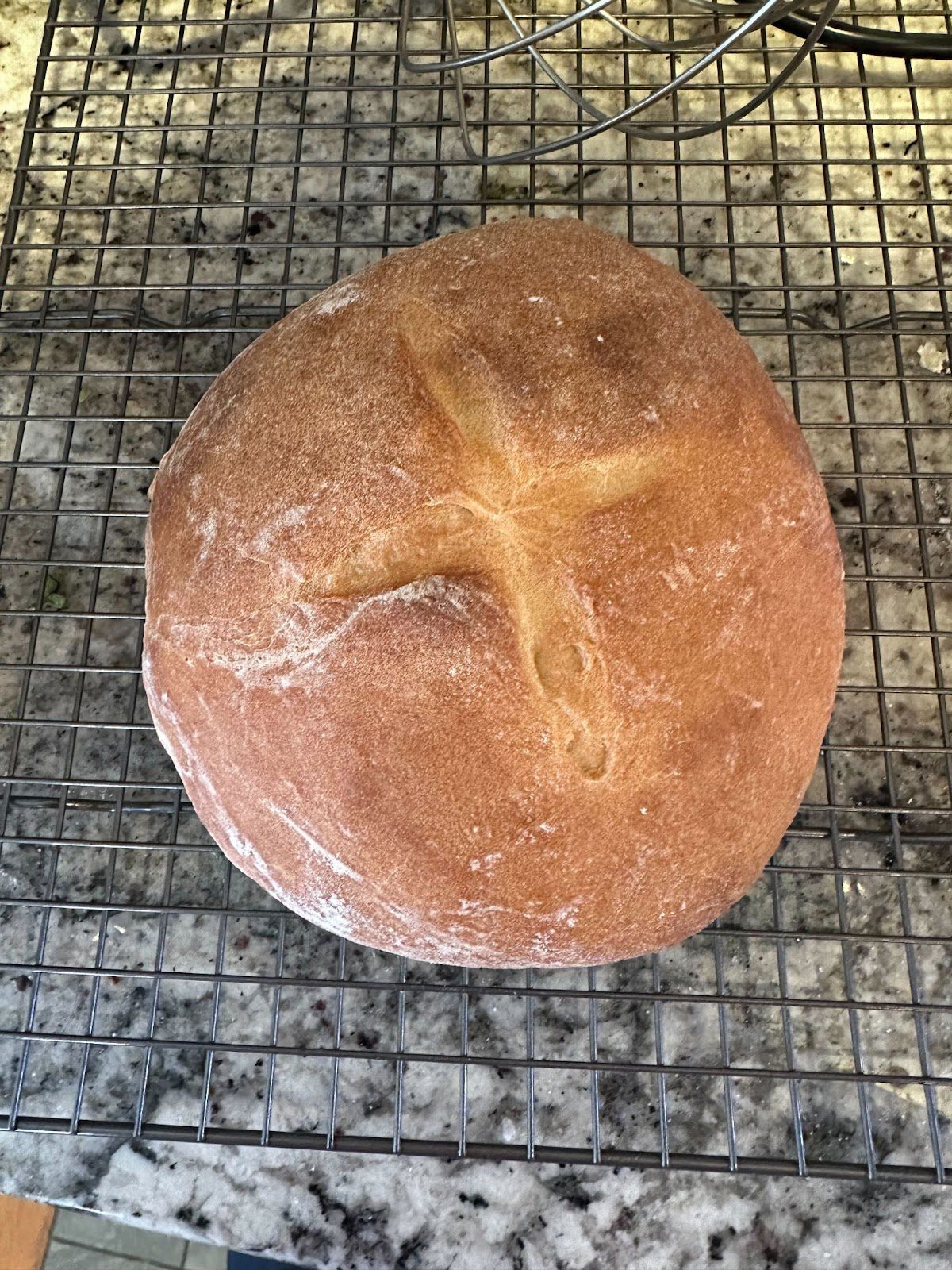
A round loaf of freshly baked bread with a cross cut on top, cooling on a wire rack.

🍫 The Chocolate Espresso Sauce

This is where the magic happens. Bright espresso blends with Dos Rios chocolate for a sauce that’s smooth, fragrant, and layered with flavor.

Ingredients:

  • 3 oz Amano Dos Rios chocolate (bar or wafers)
  • 2 fl oz blonde espresso with crema
  • ¼ cup granulated sugar
  • ½ tsp pure vanilla extract

Instructions:

  1. Heat espresso and sugar to a simmer.
  2. Lower heat and whisk in the chopped chocolate until glossy.
  3. Add vanilla, stir, and keep warm. (Can be made ahead and reheated.)

🍽️ The French Toast

Ingredients:

  • 2 large eggs
  • 2 tbsp light brown sugar
  • ½ tsp vanilla extract
  • ⅛ tsp ground cinnamon
  • 4 fl oz whole milk
  • Oil and butter for frying
  • Fresh fruit for serving

Instructions:

  1. Slice bread into eight thick pieces.
  2. Whisk eggs, sugar, vanilla, cinnamon, and milk.
  3. Dip bread, coat well, and fry in oil and butter until golden brown on both sides.
  4. Plate, drizzle generously with chocolate sauce, and garnish with fruit if desired.

A plate of French toast slices with fresh strawberries and a side of chocolate syrup.

Tips for Perfection

  • Use blonde espresso: Its light roast lets the delicate notes of Dos Rios shine.
  • Make ahead: Both the bread and sauce can be prepped in advance.
  • Don’t skip the butter: It creates that golden, crisp finish French toast dreams are made of.

The Final Bite

This French toast is a luxurious breakfast worth savoring every bite. It is a way to begin your day with intention, flavor, and a touch of indulgence. Whether you’re impressing brunch guests or treating yourself to a slow morning, this dish turns any moment into something memorable.

Ready to taste what sets Amano Chocolate apart? Start with this recipe — and don’t be surprised if it becomes your new weekend favorite. Try our collection of other rich, decadent chocolates today.

The Ultimate Guide to Tasting Single Origin Chocolate Like a Pro

Cocoa beans drying on a mat under a bamboo structure with a turkey nearby.

Most people eat chocolate without truly tasting it. Single origin chocolate invites a deeper experience, using cacao from one region to highlight the land’s unique character — bright citrus, warm spice, or earthy richness.

This guide helps you move beyond casual snacking. You’ll learn to taste with intention, recognize flavor notes, and understand how origin and craft shape every bite. Whether starting fresh or refining your palate, you’ll discover how real chocolate tells a story through flavor.

What makes single origin chocolate special

A man and woman help children engage in an outdoor activity

Single origin chocolate uses cacao beans harvested from one specific region, farm, or cooperative. Blended chocolate combines beans from multiple locations to create consistency, while single origin chocolate highlights the natural character of its source. Every bite expresses the unique identity of that place.

Terroir shapes the flavor. Soil, climate, rainfall, altitude, and nearby vegetation all influence how cacao develops. These factors leave their imprint on the beans long before roasting begins. Like grapes in winemaking, cacao absorbs the essence of its environment. After fermentation and drying, the beans carry those environmental signatures into the final bar.

Origin shapes the tasting experience more directly than cacao percentage. A 70% bar from Madagascar bursts with citrus and red fruit, while a bar with the same percentage from Ecuador leans into floral or earthy tones. Flavor reflects the land where the cacao grew and the hands that guided it through every step.

Single origin chocolate invites focused tasting. It rewards attention to detail, celebrates diversity of flavor, and reveals the connection between chocolate and place. When you understand the origin, you understand what makes each bar unforgettable.

How to prepare for a proper tasting

Start with high-quality single origin chocolate. Select bars from makers who emphasize craftsmanship, transparency, and ethical sourcing. Choose brands like Amano that showcase the distinct character of each cacao origin. These bars deliver layered flavors and smooth textures ideal for a focused tasting experience.

Serve chocolate at the right temperature. Aim for 65 to 70 degrees Fahrenheit. At this range, the chocolate softens slightly at this range, releases its aroma, and melts cleanly on the tongue. Let the bar rest at room temperature before tasting if it feels too cold.

Create a neutral environment. Use natural lighting to observe the chocolate’s color and sheen. Eliminate competing smells by removing scented candles, perfumes, or cooking odors from the space. A calm, clean setting sharpens your senses and brings focus to the flavors.

Cleanse your palate between tastings. Sip room-temperature water or eat a piece of unsalted cracker to clear lingering flavors. This resets your taste buds and prepares you to notice new notes in the next sample.

Approach the tasting with curiosity. Preparation enhances perception. By setting the right conditions, you invite each bar to reveal its story through flavor, texture, and aroma.

Step-by-step guide to tasting single origin chocolate like a pro

Tasting single origin chocolate with purpose deepens your appreciation for its flavor, origin, and craftsmanship. Activate your senses and follow these steps to explore each bar with clarity.

Look

Examine the chocolate under natural light. Observe its surface for smoothness and sheen. Well-tempered chocolate reflects light and displays a consistent hue, whether deep mahogany, reddish-brown, or nearly black. Imperfections like streaks or gray patches suggest poor storage or tempering.

Snap

Break a piece cleanly and listen. A crisp snap indicates proper tempering and structure. A dull or crumbly break points to flaws in processing or temperature control. This small moment reveals the bar’s quality before it reaches your palate.

Smell

Lift the piece to your nose and inhale deeply. Identify aromas such as citrus, red berries, toasted nuts, jasmine, spice, or earth. These scents emerge from the bean’s origin, fermentation, and roast. Smell prepares your taste buds for what follows and reveals the bar’s personality.

Taste

Place the chocolate on your tongue and let it melt slowly. Chewing interferes with the flavor evolution. As it softens, track the transitions. Perhaps a burst of fruit, a wave of cocoa richness, then a finish with floral or nutty complexity. A refined bar unfolds in layers and leaves a clean, satisfying aftertaste.

Reflect

Record your impressions immediately. Note texture, flavor notes, and how the finish lingers. Compare chocolates from different origins side by side. Tracking your reactions sharpens your palate and reveals your personal preferences.

Approach every tasting with curiosity. Each bar delivers a story through its flavor, texture, and aroma. Savor it slowly and discover what makes single origin chocolate an experience worth exploring.

Tasting notes to watch for

Each bar of single origin chocolate tells a story rooted in soil, climate, and craftsmanship. Recognize key flavor notes to follow that story with clarity and confidence.

Explore regional profiles

Identify origin-based characteristics. Madagascar cacao reveals bright citrus, tart red berries, and playful tanginess. Venezuelan beans deliver deeper flavors — plum, raisin, spice, and wine-like richness. Peruvian origins showcase floral highs, nutty warmth, and gentle earthiness. Regional profiles reflect terroir and farming practices, giving each bar a distinct voice.

Evaluate balance and structure

Track acidity, bitterness, sweetness, and mouthfeel. High acidity brightens flavor and adds liveliness. When integrated well, bitterness brings depth and structure. Subtle sweetness rounds the profile without overwhelming it. Mouthfeel shapes the experience—creamy, dry, gritty, or silky—and influences how long flavors linger.

Understand how the process shapes taste

Roasting and conching unlock and refine flavor. Light roasting preserves fruity or floral notes. Darker roasting deepens richness and highlights nutty or smoky qualities. Conching smooths texture and balances flavor by blending volatile compounds and reducing harsh acidity. Longer conching creates a cleaner, more harmonious finish.

Focus on these elements during a tasting to experience chocolate with precision. Each note you taste reflects a decision made by the grower or maker, linking you to the origin and the care behind the bar.

Comparing origins side by side

Create a vertical tasting with bars from two to four distinct regions. This method showcases how each origin expresses its unique identity through flavor, aroma, and texture. Focus on the region rather than cacao percentage to experience the influence of terroir in its purest form.

For a revealing tasting experience, start with bars that share the same cacao percentage—ideally around 70%—to ensure a fair comparison. Choose single origin bars from distinct regions such as Madagascar, Venezuela, Peru, and Ecuador. Each origin brings its own personality to the table, shaped by terroir and cacao varietal.

Break each bar into small pieces and arrange them from deepest to brightest in flavor. Begin with the boldest, earthiest profile—often found in bars from Ecuador or Venezuela. Then move toward the lighter, fruitier expressions from Peru and Madagascar. 

Starting with darker, less sweet profiles helps train your palate to recognize subtle shifts in acidity, bitterness, and texture. As you taste your way through the lineup, you’ll begin to identify the unique voice of each origin more clearly.

Taste slowly and observe how flavors unfold. Madagascar delivers citrus and red berry brightness. Venezuela brings plum, spice, and rich depth. Peru reveals floral top notes and nutty smoothness. Ecuador offers earthy, woody tones with gentle complexity. Each region leaves a distinct mark through climate, soil, and post-harvest techniques.

Notice how texture, acidity, and finish differ. One bar might melt faster or feel creamier, while another might linger with a warm, spiced finish. Vertical tasting sharpens your senses and helps you recognize the nuances shaped by place.

Record your observations as you go. Highlight the contrasts. Celebrate the surprises. A side-by-side comparison uncovers the personality of each chocolate and deepens your understanding of how terroir transforms flavor into storytelling.

Explore with Amano Chocolate

Packaging design for Amano Coffee Bar featuring a modern aesthetic and vibrant colors

Amano Chocolate celebrates single origin cacao with unmatched dedication. Each bar begins with ethically sourced beans and reflects the unique flavor of its region.

Taste Ocumare for bold red fruit and warm spice. Try Dos Rios for bright citrus and floral depth. Choose Madagascar to experience vibrant notes of raspberry and tangy citrus. Every origin tells a story through flavor, texture, and aroma.

Single Origin vs. Blended: Understanding the Distinction in Chocolate Crafting

Close-up of vibrant flowers blooming on a tree branch showcasing delicate petals and lush green leaves

Not all chocolate is created the same, even when it lists the same cacao percentage. One bar might transport you to a lush valley in Madagascar with its bright, citrusy notes, while another delivers smooth, familiar richness with no specific sense of place. That difference doesn’t lie in the cacao percentage; it lies in the origin.

Single origin and blended chocolates both deliver enjoyment, but they reflect entirely different approaches to chocolate-making. Single origin bars highlight the unique qualities of cacao from one region or estate, embracing the variability and personality of the land. Blended chocolate aims for balance and consistency, combining beans from multiple sources to create a uniform profile.

In this blog, you’ll explore the distinction between single origin and blended chocolate. You’ll learn how sourcing decisions influence flavor, how each style serves a different purpose, and why these differences matter for your palate, your values, and your overall chocolate experience. 

Whether you prefer clarity or complexity, this guide helps you understand what makes each bite meaningful.

What is single origin chocolate?

Single origin chocolate begins with a sense of place. This type of chocolate uses cacao beans grown in one specific country, region, or even a single farm. Unlike blends, which mix beans from various locations, single origin chocolate preserves the unique character of its source.

What makes it special lies in the concept of terroir. Borrowed from the world of wine, terroir refers to the influence of soil, climate, altitude, and local farming practices on flavor. Cacao grown in volcanic soil under tropical rain produces very different notes than cacao grown at high altitudes in drier regions. Every factor, from rainfall to fermentation, shapes the flavor of the final bar.

These bars often highlight bold, distinctive flavor profiles that reflect their origin. A single origin chocolate from Madagascar might burst with citrus and red berry brightness. Venezuelan bars often reveal rich, wine-like depth with hints of spice. Peruvian cacao tends to lean toward floral and nutty tones. 

These notes occur naturally in the bean and come alive through careful fermentation, roasting, and conching.

When you taste a single origin bar, you experience more than chocolate. You taste the land, the harvest, and the care taken at every step. It’s a celebration of place, transformed into flavor.

What is blended chocolate?

Blended chocolate combines cacao beans from multiple origins, regions, or harvests to create a uniform product. Instead of highlighting the unique characteristics of a single source, blended chocolate focuses on consistency, balance, and broad appeal.

Chocolate makers blend beans to achieve a specific flavor profile. They carefully select and mix different types of cacao to adjust levels of acidity, bitterness, sweetness, and richness. This method smooths out extremes and creates a flavor that remains familiar from bar to bar.

Blending plays a major role in commercial chocolate. Large-scale producers rely on it to maintain consistency across vast product lines. Because harvests and growing conditions change year to year, blending helps mask these variations and keep the final product tasting the same. 

It also allows companies to control costs by sourcing beans from multiple suppliers based on availability and price.

While blending supports stability and scalability, it often reduces the opportunity to showcase the nuanced flavors of high-quality beans. Instead of expressing the character of a specific region, blended chocolate tends to offer a mellow, crowd-pleasing flavor with less complexity.

Blends provide a reliable option for those seeking predictability or looking for an accessible introduction to chocolate. But for flavor exploration and a deeper connection to cacao’s origin, single-origin bars offer a more distinctive and memorable experience.

Comparing the flavor experience

The flavor of chocolate reveals much more than sweetness or richness — it tells a story. When you compare single origin and blended chocolate side by side, you experience two very different narratives. Each approach offers its own strengths, depending on what you want from the moment.

Single origin chocolate delivers a sense of place
A man is seen holding a bowl of cocoa beans emphasizing their importance in the chocolate-making process

Every bar draws its flavor from a specific location, shaped by the region’s soil, climate, and cultivation methods. You might taste bright citrus from Madagascar, warm spice from Venezuela, or floral depth from Peru. 

These bars reflect the journey of the cacao itself. They invite you to explore, compare, and connect with the character of the land and the craftsmanship behind it. Single origin chocolate provides an unforgettable adventure for those who love flavor discovery and value transparency in sourcing.

Blended chocolate focuses on balance and familiarity

Instead of showcasing one location, it smooths flavor edges and highlights harmony. You taste a rounded richness that stays consistent from batch to batch. Blends work well for those who want a dependable flavor without surprises. They serve as a daily treat — accessible, comforting, and easy to enjoy without needing much thought.

So when should you choose each? 

If you want to explore, compare origins, and experience the complexity of terroir, single origin chocolate offers a more rewarding path. If you prefer a reliable flavor for baking, gifting, or everyday enjoyment, blended chocolate provides that consistent pleasure.

Both types have value. One brings discovery, the other delivers reliability. Tasting them with intention reveals how the craft of chocolate reaches far beyond the wrapper.

Craftsmanship and transparency

Behind every chocolate bar lies a story about how it was made and who made it. The difference between single origin and blended chocolate often extends beyond flavor into the values and practices of the people behind the process.

Single origin chocolate reflects the hands of the maker

Small-batch artisans often source beans through direct trade relationships with farmers. These partnerships encourage fair pricing, environmental stewardship, and knowledge exchange. Makers choose cacao from a specific region because they want to highlight its unique character. 

They roast and refine with precision, crafting each bar to honor the origin’s flavor. This process demands skill, time, and care. You see the transparency in how these makers talk about where their cacao comes from and what makes it special. The result feels personal, because it is.

Blended chocolate often tells a different story

Large-scale producers usually prioritize consistency, volume, and brand recognition. They may source beans from multiple regions without disclosing specific origins. This approach focuses on predictability, but it can hide the details of where the cacao was grown, who cultivated it, and how it was handled. 

Without transparency, it becomes harder to understand what values drive the production or who benefits from your purchase.

When you choose a chocolate bar, you choose a philosophy

Single origin chocolate speaks of relationships, place, and purpose. It connects you with the farmer, the region, and the maker’s intention. Blended chocolate supports scale and reliability but may sacrifice that deeper connection.

By paying attention to the label and the story behind it, you empower yourself to support craftsmanship, traceability, and ethical practices. Great chocolate begins with great people — and the bar you choose reflects the values you taste.

How to taste the difference

Tasting chocolate becomes more rewarding when you explore how different styles express flavor. Comparing single origin and blended bars side by side sharpens your palate and reveals the impact of sourcing and craftsmanship. Follow this simple tasting approach to discover how each type tells a unique story.

Start by selecting your bars

Choose a high-quality single origin chocolate and a blended chocolate with a similar cacao percentage. For example, compare a 70% Madagascar bar to a 70% blend from a well-known brand. This creates a level playing field and helps you focus on how the origins and methods influence taste.

Use all five senses

Begin with your eyes. Examine the surface of each bar. A smooth, glossy finish signals proper tempering. Note any differences in color. Single origin bars sometimes show subtle shifts based on the bean. Next, break a piece and listen for a clean, sharp snap. This sound hints at the chocolate’s texture and structure.

Inhale deeply before tasting

Let the aroma rise. Single origin bars often release layered scents like fruit, spice, or floral tones. Blended chocolate tends to smell more uniform, often emphasizing cocoa and sweetness.

Let the chocolate melt slowly on your tongue

Don’t chew. Focus on the flavor’s evolution. Single origin bars frequently deliver waves of complexity — bright acidity, shifting notes, and a lingering finish. Blended bars usually taste smoother, more rounded, and more consistent from start to finish.

Reflect after tasting

Write down your impressions. Which bar told a clearer story? Which one offered depth or surprise? Which felt more balanced?

A man is seen holding a bowl of cocoa beans emphasizing their importance in the chocolate-making process

Discover true flavor with Amano Chocolate

At Amano Chocolate, we focus on bringing out the true character of every cacao origin. We craft each bar using the finest single origin beans from regions such as Madagascar, Venezuela, Ecuador, and the Dominican Republic. 

Instead of defining a country by a single flavor profile, we recognize that even neighboring valleys within the same region can produce dramatically different expressions.

For example, our Macoris and Dos Rios bars both come from the Dominican Republic, yet their flavor experiences vary widely—one might reveal bright floral notes while the other leans into bold spice or tropical fruit.

By honoring the individuality of each cacao source, we allow the origin to guide the flavor. Our small-batch process preserves these natural distinctions and elevates the most compelling notes found in each bean, whether that’s citrus, red berries, wine-like depth, or earthy richness. Every Amano bar tells a unique story, shaped by soil, climate, and craftsmanship.

Whether you’re exploring chocolate for the first time or refining your tasting skills, Amano offers a delicious way to experience the depth and beauty of artisan craft. Taste the difference for yourself. Shop Amano today, and discover what real chocolate should be.

Artisanal vs. Commercial: What Makes Artisan Chocolate So Special?

A wooden table displays an assortment of chocolate and spices

Not all chocolate is created equal, especially when you compare artisanal chocolate to its commercial counterpart. 

Most grocery store shelves overflow with brightly wrapped bars from well-known brands, promising instant satisfaction with every bite. These mass-market chocolates serve a purpose, offering accessibility and consistency, but they often sacrifice quality for quantity. 

Behind the colorful packaging lies a product engineered for uniformity and shelf life, not for depth of flavor, transparency, or meaningful craftsmanship.

Artisanal chocolate changes that experience entirely. It begins with the bean and honors the journey from farm to bar. Chocolate makers specializing in craft chocolate focus on ethical sourcing, small-batch production, and thoughtful technique. They select cacao for its origin, not its yield. They roast and conch with care, adjusting their approach to highlight the unique qualities of each harvest. 

The result is chocolate that does more than taste good —  it reveals complexity, emotion, and story in every bite.

Artisanal chocolate respects the environment, supports farmers, and invites you to taste chocolate how you were meant to enjoy it: slowly, thoughtfully, and with a sense of wonder. It asks you to go beyond sweetness and discover a world of flavor shaped by soil, sun, and skilled hands.

In this blog, we’ll explore what makes artisanal chocolate so special and how it compares to mass-produced alternatives. From ingredient quality and ethical sourcing to flavor complexity and the consumer’s experience, you’ll learn why craft chocolate deserves your attention — and your palate. 

Whether you’re discovering bean-to-bar for the first time or seeking a deeper appreciation for the chocolate you already love, this guide will help you make more informed, flavorful choices.

Ingredients: Quality over quantity

One of the most noticeable differences between artisan and commercial chocolate begins with the ingredients. Pick up a typical mass-produced chocolate bar, and you’ll likely find a long list of additives: emulsifiers, artificial flavors, milk powders, excess sugar, and preservatives. 

These ingredients aim to cut costs, extend shelf life, and standardize flavor, but they often strip the chocolate of its natural richness and complexity.

Artisan chocolate takes the opposite approach. Makers rely on a short, intentional list of ingredients — usually cacao beans, cane sugar, cocoa butter, or sometimes vanilla bean or milk. That simplicity allows the true flavor of the cacao to shine. Nothing gets in the way of the origin’s character, the roast’s depth, or the texture’s purity.

Cocoa butter

Cocoa butter plays a critical role in the quality of the final bar. Real cocoa butter gives chocolate its signature melt and smooth mouthfeel. In fact, in order to legally be called chocolate, it must contain cocoa butter. 

Some commercial brands replace it with cheaper fats or “chocolate flavor”, which can feel waxy or greasy and leave a dull aftertaste. Artisan makers use only pure cocoa butter, which enhances both texture and taste.

Sugar

Sugar content also matters. While commercial chocolate often overwhelms the palate with sweetness, artisan chocolate uses sugar to balance, not mask, the cacao’s natural flavor. This careful approach reveals a range of tasting notes that span from bright and fruity to rich and earthy.

Cacao

The most important ingredient in any chocolate bar is the cacao itself. Artisan makers start with high-quality beans, often sourced from small farms or single origins known for exceptional flavor. 

These cacao beans develop distinctive profiles shaped by their origin, varietal, and post-harvest handling. Varieties like Forastero, Trinitario, Criollo, and Nacional each contribute their own character, ranging from bold and earthy to delicate and floral. 

The region’s soil, climate, fermentation method, and drying process all influence the final flavor. When chocolate makers honor these elements, they craft bars with remarkable depth, vibrant clarity, and a rich, lingering finish.

When you choose chocolate made with clean, thoughtful ingredients, you taste more than sweetness. You experience the full expression of the bean, the land it came from, and the maker’s commitment to quality.

Sourcing: Ethical, transparent, and sustainable

A chocolate bar displayed on a dark surface showcasing its smooth rich appearance

Behind every great chocolate bar lies a story about where the cacao came from and how it reached the maker’s hands. In the world of artisan chocolate, sourcing is not simply a supply chain step — it’s a core value. 

Artisan makers build direct relationships with cacao farmers, often working closely with small cooperatives or single estates. These partnerships ensure fair compensation, encourage sustainable practices, and create a clear line of traceability from farm to finished bar.

Direct trade allows chocolate makers to select beans based on quality, flavor, and farming integrity. 

Artisans work directly with growers to support environmentally responsible farming methods and help preserve heirloom cacao varieties. 

This approach improves the lives of farming communities but also enhances the final product. Beans grown with care and processed correctly carry richer, more complex flavor profiles that industrial cacao can’t match.

Sustainability goes beyond the farm. Artisan chocolate makers often invest in eco-friendly packaging, use ethical labor practices, and prioritize low-impact production methods. 

Many also share information openly about where their beans come from and how they were processed, offering full transparency to consumers. This level of openness builds trust and connects chocolate lovers with the people and places behind the product.

In contrast, commercial chocolate companies rely on large-scale commodity cacao sourced through global supply chains that offer little visibility. Beans are often bulked together from multiple regions, with less regard for farming conditions or flavor potential. 

This lack of transparency makes it difficult to trace the origin of the cacao or ensure that farmers receive fair pay. It also increases the risk of environmental harm, child labor, and unethical labor practices — issues still affecting parts of the global cacao industry.

Choosing artisan chocolate means supporting a more ethical and sustainable model. It empowers farmers, preserves biodiversity, and gives consumers a product made with intention and respect. Knowing where your chocolate comes from and how it was made, every bite carries more meaning.

Process: Craftsmanship vs. mass production

The way chocolate is made has a profound effect on its taste, feel, and satisfaction. In artisan chocolate, every step of the process receives close attention. Makers handle each batch with care, treating chocolate as a craft rather than a commodity. 

Small-batch production allows artisans to slow down, observe details, and adjust their techniques based on the unique qualities of each cacao harvest.

Fermentation

Craft chocolate begins with properly fermented beans. Fermentation is the foundation of flavor. Skilled farmers and makers monitor temperature, airflow, and timing to unlock the bean’s potential. Depending on its origin, a well-fermented bean will develop layers of fruit, acidity, or earthiness.

Roasting

After fermentation, roasting becomes the next important step. Artisan makers don’t apply a one-size-fits-all roast. They develop custom roast profiles that match the bean’s origin and desired flavor notes. Some beans shine with a lighter roast that brings out brightness and floral tones. Others benefit from a darker roast that intensifies richness and body. 

Every roast is deliberate and done mindfully, in contrast to large chocolate makers who seek uniformity and consistency. 

Conching

Conching follows, where the chocolate is refined, aerated, and transformed into a smooth, flavorful mass. In small-batch chocolate, conching times often stretch for hours—or even days—to perfect the balance of aroma, texture, and taste. This slow refinement helps round out bitterness, mellow acidity, and create the velvety melt artisan chocolate is known for.

In contrast, commercial chocolate relies on fast, high-volume machinery. Fermentation often happens in bulk, with little room for precision. Roasting follows a standard recipe, regardless of origin, designed to create a consistent but limited flavor. Conching times are kept short to reduce production costs, which can leave the chocolate tasting flat or gritty.

Artisan makers treat each step as a chance to elevate the final product. They listen to the beans, adapt their methods, and introduce flavors that commercial processes overlook. That level of care turns chocolate into a memorable, sensory-rich experience.

Flavor: A sensory journey

A variety of chocolate pieces and nuts are scattered across a wooden table surface

Flavor is where artisan chocolate sets itself apart most vividly. It doesn’t exist to satisfy a sugar craving or deliver a quick hit of sweetness. Instead, true artisan chocolate is savory enough to last chocolate lovers a month!

Instead, it invites you into a deeper, more immersive tasting experience. Every bite tells a story — from the soil where the cacao grew to the hands that shaped it into a finished bar.

Artisan chocolate offers flavor profiles that feel as dynamic and layered as a fine wine or a single-origin coffee. 

You might taste ripe berries, toasted almonds, floral hints, or even whispers of spice and earth. These notes don’t come from added flavorings. They emerge naturally from the bean and develop through careful fermentation, precise roasting, and slow conching. The result is chocolate that evolves on the palate, revealing new dimensions with each taste.

Every bar reflects the maker’s choices and the cacao’s origin. A Madagascan bar might burst with tart citrus and red fruit, while a Venezuelan bar could offer dried plum, molasses, and spice notes. Peruvian cacao might surprise you with creamy, nutty undertones or a subtle floral lift. Each origin delivers a distinct sensory experience, shaped by environment and craftsmanship.

By contrast, mass-produced chocolate often tastes overly sweet and uniform. Large manufacturers formulate their bars for mass appeal, blending beans from multiple sources and adding extra sugar, vanilla flavoring, or milk powders to create consistency. 

This approach tends to flatten the flavor, making the chocolate taste pleasant but forgettable. Texture might feel waxy or gritty, and the finish disappears quickly, leaving little impression.

Tasting artisan chocolate feels different. It encourages you to slow down, savor, and explore. It rewards curiosity and invites reflection. When you treat chocolate as more than a snack, you discover a world of flavor that connects you to places, people, and passion — all in a single square.

Experience: Connecting with the maker and the source

Artisan chocolate offers more than flavor — it offers a connection. Each bar tells a story that begins in the soil where the cacao grows and travels through the hands of the farmer, the maker, and finally, the person who unwraps and tastes it. When you choose artisan chocolate, you don’t merely consume a product. You engage with a craft rooted in culture, place, and purpose.

From the start, artisan chocolate centers on transparency. Makers often highlight where the beans came from, who grew them, and how they were processed. This traceability deepens your appreciation for the final product. You see the faces behind the farms and understand how environmental conditions, farming practices, and fermentation methods influence the chocolate’s unique character.

Packaging plays a vital role in shaping that experience. Artisan chocolate often arrives in beautifully designed wrappers that reflect the brand’s identity and values. Some include tasting notes, origin details, or stories from the farm, helping you connect with the journey from bean to bar. This attention to presentation elevates the moment from a casual treat to a meaningful ritual.

When you support artisan makers, you support much more than flavor. You invest in sustainable farming, ethical labor, and creative independence. Your choice helps preserve traditional cacao varieties, empower small communities, and encourage a more mindful food system.

Eating artisan chocolate becomes a full sensory experience involving sight, smell, taste, and story. It turns a simple indulgence into something memorable, meaningful, and worth savoring. Every bar offers a chance to connect, explore, and appreciate the true artistry behind chocolate.

Value: Why artisan chocolate is worth the investment

Artisan chocolate often carries a higher price tag than mass-produced bars, but that price reflects far more than packaging or branding. It represents the care, quality, and ethics embedded in every step of the process, from the cacao farm to the final tasting experience. 

When you pay a little more, you receive something much greater in return: unmatched flavor, full transparency, and the chance to support a better chocolate industry.

Several factors contribute to the cost of artisan chocolate. Makers source premium cacao from small farms that prioritize quality over yield. They pay farmers fairly, often through direct trade relationships that create lasting partnerships and support sustainable practices. These beans arrive in small quantities and require hands-on processing, from custom roasting to extended conching. 

This labor-intensive approach takes time, skill, and dedication, all of which add to the final cost and quality.

When you buy artisan chocolate, you invest in flavor. Each bar carries a unique profile shaped by origin, fermentation, and craft. 

Instead of tasting overly sweet or generic, artisan chocolate delivers complexity, texture, and a satisfying finish that lingers on the palate. One square can provide more enjoyment than an entire mass-market bar, encouraging slower, more mindful indulgence.

The value also extends beyond taste. Choosing artisan chocolate supports ethical sourcing, biodiversity, and environmental stewardship. It helps preserve heirloom cacao varieties, improve working conditions for farmers, and promote transparency in an industry that still faces exploitation at its lowest levels.

Mindful indulgence means treating chocolate not as a throwaway snack, but as a meaningful experience. It means choosing quality over quantity, flavor over flash, and integrity over convenience. Artisan chocolate invites you to savor rather than consume, and in doing so, it offers richness in every sense of the word.

Experience all artisan chocolate has to offer with Amano

Close-up of chocolate flowing emphasizing its silky texture and enticing sheen

If you’re ready to taste the difference for yourself, Amano Chocolate offers the perfect place to begin your journey. As one of the pioneers of the American bean-to-bar movement, Amano crafts award-winning chocolate with purpose, passion, and precision. 

Every bar begins with the world’s finest single-origin cacao, sourced through ethical relationships that prioritize sustainability and quality. From the fruity brightness of Madagascar to the deep, wine-like complexity of Venezuela, Amano celebrates the distinct voice of each region while maintaining a level of artistry that few brands achieve.

These aren’t generic, one-note chocolates — they are layered, expressive, and deeply satisfying. Whether you enjoy the vibrant snap of dark chocolate, the smooth elegance of milk, or the unexpected brilliance of inspired inclusions, Amano delivers a sensory experience that reflects the true potential of chocolate as a culinary art.

Discover chocolate that honors the bean, respects the land, and tells a story from the first aroma to the final melt. Explore the full collection at Amano Chocolate and experience what real chocolate should taste like: pure, intentional, and unforgettable. Once you’ve tasted the difference, there’s no going back.

The Art of Pairing: Artisan Chocolate and Fine Wine

Red wine, glasses and chocolate pieces on a wooden table.

Chocolate wine, two of life’s most celebrated indulgences: learn how to pair artisan chocolate and wine by exploring balance, texture, and origin.

Why artisan chocolate makes a difference

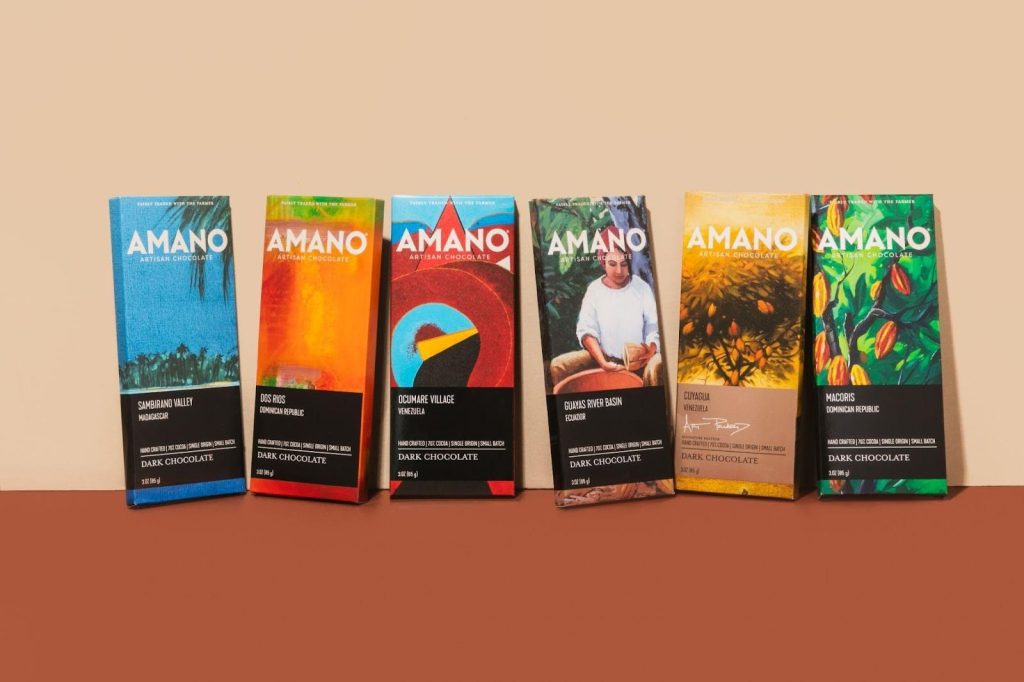
A variety of Amano Artisan Chocolate bars with colorful packaging on a beige background.

Quality sets artisan chocolate apart and makes it ideal for wine pairing. Makers use carefully sourced cacao from specific regions, each offering unique flavor notes — from Madagascar’s bright citrus to Venezuela’s deep, wine-like richness. Expert fermentation, roasting, and conching preserve the bean’s character and create depth, balance, and complexity.

Mass-produced chocolate often relies on sugar, additives, and blended beans, resulting in flat, overly sweet flavors that clash with wine. By contrast, artisan chocolate supports and enhances the wine, creating a thoughtful, elevated tasting experience that reflects origin and craftsmanship.

The basic principles of pairing

Pairing artisan chocolate with fine wine begins with understanding how flavor, structure, and texture interact. Both wine and chocolate offer complexity, but to achieve harmony, you must approach each pairing with purpose and attention.

Start by matching intensity. Bold wines require equally bold chocolates. A full-bodied Cabernet Sauvignon brings out the richness in high-percentage dark chocolate. Lighter wines like Pinot Noir or Riesling complement milk or white chocolate with smoother textures and gentler sweetness. 

When wine and chocolate share similar depth, they enhance each other without overpowering the palate.

Use both complement and contrast to create balance. Complementary pairings highlight shared notes, so pair cherry-forward chocolate with a fruit-forward red to reinforce the flavor profile. 

Contrasting pairings introduce tension and intrigue. For example, match a sea salt inclusion bar with a sweet dessert wine to create a dynamic interplay between savory and sweet. Each approach delivers a distinct sensory experience.

Focus on structure: tannins, acidity, sweetness, and mouthfeel. High-tannin wines demand fat and richness in the chocolate to soften their edges. Bright, acidic wines refresh the palate when paired with chocolate that offers fruity or tangy undertones. Always match sweetness carefully.

If the chocolate tastes sweeter than the wine, the wine may turn sharp or bitter. Align sweetness levels to maintain balance. Finally, match mouthfeel. Silky wines work best with creamy chocolate, while crisp wines cleanse the palate between bites of dense, dark bars.

Approach pairing with intention. Let each element support the other. When you match flavor, structure, and intensity, wine and chocolate create a layered, memorable experience that goes far beyond indulgence.

Classic pairings to try

Pairing chocolate with wine becomes more rewarding when you match their intensity, texture, and flavor profiles. These classic combinations highlight how thoughtful pairings elevate both elements, creating a richer, more memorable tasting experience.

Dark chocolate with Cabernet Sauvignon

Pair bold with bold. Choose a rich, dark chocolate with high cacao content and match it with a structured Cabernet Sauvignon. The chocolate’s depth enhances the wine’s dark fruit, while the wine’s tannins balance the chocolate’s bitterness. Together, they create a powerful and elegant flavor experience.

Milk chocolate with Pinot Noir

Combine milk chocolate’s creamy texture with Pinot Noir’s bright acidity and red berry notes. This pairing feels smooth and balanced, with the chocolate’s caramel tones playing off the wine’s fruit-forward character. Pinot Noir’s softness complements the richness without overwhelming it.

White chocolate with Moscato or Riesling

Match white chocolate’s buttery sweetness with a vibrant wine like Moscato or an off-dry Riesling. These wines offer floral aromatics, fresh acidity, and fruit notes that brighten the chocolate’s richness. The result feels light, playful, and indulgent without becoming too heavy.

Single-origin dark chocolate with Zinfandel or Syrah

Highlight regional character by pairing single-origin dark chocolate with wines that match its depth. Choose a bar from a region like Madagascar, Peru, or Venezuela, and pair it with a bold red like Zinfandel or Syrah. The wine’s spice, ripe fruit, and body mirror the chocolate’s complexity, revealing new layers with each taste.

Use these combinations as inspiration. Taste slowly, explore mindfully, and notice how each element changes when paired. Let flavor lead, and you’ll uncover intentional, elevated, and unforgettable pairings.

Exploring origin-based pairings

Start your pairing journey by focusing on the origin of the cacao. Like grapes in winemaking, cacao beans absorb the characteristics of their environment. Soil, climate, altitude, and local farming practices influence the bean’s flavor. This distinct sense of place, known as terroir, shapes each bar’s identity. 

When you choose wine that reflects or complements those regional flavors, you create a pairing that feels intentional and elevated.

Taste the chocolate first. Identify its dominant notes. Look for brightness, richness, spice, fruit, or floral tones. Use these flavors to guide your wine selection.

For example, Madagascar cacao often delivers lively citrus, tart berries, and a clean finish. Pair it with a vibrant red like Grenache or Beaujolais. These wines bring their own fruit-forward character and natural acidity, which match the chocolate’s brightness without overwhelming it.

Venezuelan cacao usually produces deeper, more robust flavors such as raisin, molasses, or warm spice. Choose a full-bodied red like Syrah or Malbec to complement this richness. These wines bring bold fruit and structure, enhancing the chocolate’s complexity.

Peruvian chocolate often carries nutty, floral, or creamy notes. Pair it with a delicate Pinot Noir or a lightly oaked Chardonnay. These wines soften the chocolate’s earthy tones, bringing out its subtle layers without overshadowing its natural profile.

Treat both wine and chocolate as expressions of their origin. Match them based on shared qualities or compelling contrasts. By aligning their stories, you invite deeper discovery and create a tasting experience grounded in place and purpose.

Explore regional pairings with curiosity and attention. Taste thoughtfully. Let origin lead. You’ll unlock connections that reveal the craftsmanship, culture, and natural beauty behind every bar and bottle.

Tips for hosting a tasting experience

Friends toasting wine glasses outdoors under a blue sky.

Creating a chocolate and wine tasting at home offers an elegant way to explore flavor, enjoy conversation, and indulge in sensory discovery. With a few thoughtful details, you can transform a casual evening into a curated experience that feels both luxurious and approachable.

Start with temperature 

Serve chocolate at room temperature, ideally between 65°F and 70°F. This allows the cocoa butter to soften slightly and release its full aroma. If chocolate feels too cold, it will snap too hard and mute the flavor. 

Let it rest outside the wrapper for a few minutes before tasting. For wine, follow general guidelines based on the type. Chill white wines to around 50°F, keep reds slightly cooler than room temperature at about 60°F to 65°F, and serve dessert wines chilled to enhance balance.

Cleanse your palate 

Between pairings, sip room-temperature water or nibble on a neutral cracker to reset your taste buds. Avoid flavored sparkling waters, cheeses, or acidic fruits that linger on the palate and interfere with the subtle notes in the next pairing.

Follow a deliberate order

Begin with lighter chocolates and wines before moving toward darker, bolder flavors. Start with white chocolate or a fruit-forward milk chocolate, then progress to single-origin dark chocolate with higher cacao percentages. 

Match the wine progression as well, beginning with light-bodied whites or rosés, followed by reds, and ending with dessert wines or fortified selections. This flow helps preserve clarity and avoids overwhelming your senses early in the tasting.

Create an atmosphere that encourages slow savoring

Choose elegant glassware and lay out tasting notes or pairing cards for guests to follow. Use soft, warm lighting to create a relaxed tone. 

Curate a background playlist with gentle jazz, classical, or acoustic music to maintain focus and keep the energy intimate. Arrange chocolates with space between them so each feels distinct. Pour small wine samples to encourage mindful tasting rather than casual sipping.

With thoughtful preparation, your tasting becomes more than an event — it becomes a shared experience. Invite your guests to discuss what they taste, compare notes, and discover their preferences. The more attention you bring to each element, the more rewarding and memorable the evening will be.

Pairing Amano Chocolate with fine wine

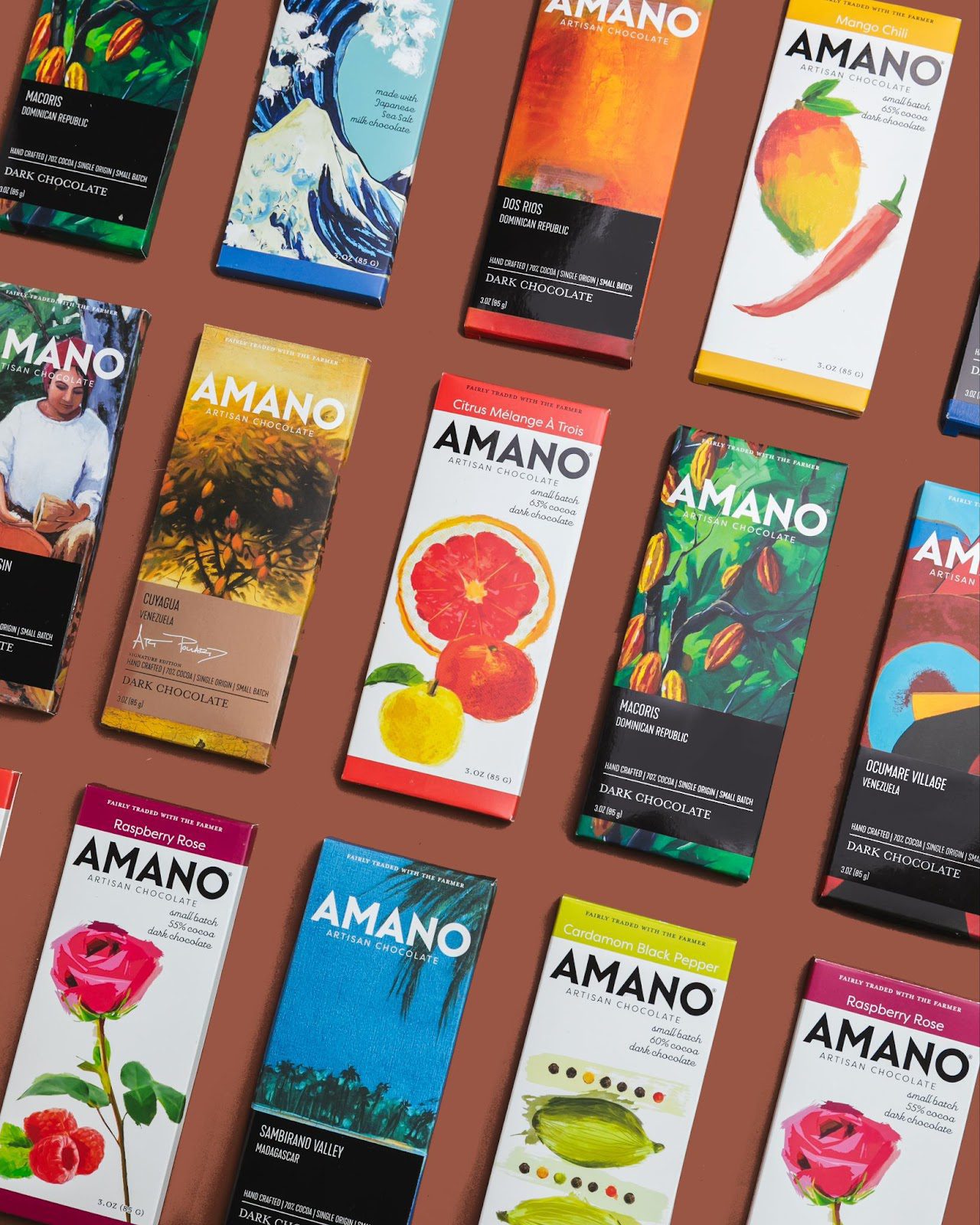
Assorted Amano Artisan Chocolate bars with colorful packaging on a brown surface.

Pairing artisan chocolate with fine wine transforms flavor into an experience. When you choose chocolate made with care, you elevate every sip and every bite. Amano Chocolate offers award-winning, single-origin bars crafted to reveal the full depth of cacao.

As food writer and chocolate sommelier Estelle Tracy explains,

“I’m a big fan of pairing Amano Chocolate bars with wine for two reasons. Wine pairs well with fatty foods, and since Amano Chocolate has a good amount of cocoa butter content, I find the bars work beautifully with wine. When a chocolate doesn’t have enough cocoa butter, it feels dry and pasty in the mouth with wine. Amano also does a great job evenly distributing inclusions in their bars, so every square has the perfect amount of flavor — ideal for sharing during a pairing. I love pairing Amano’s Raspberry Rose with Pinot Noir and the Citrus Mélange à Trois with sparkling or white wines.”

Each bar pairs beautifully with thoughtfully selected wines, making Amano the perfect choice for your next tasting or an unforgettable gift. Taste the difference. Experience true chocolate with our collection.

Beyond Milk and Dark: Exploring the Range of Artisanal Chocolate Flavors

Assorted desserts with chocolate, strawberries, and nuts on a wooden table.

Most people think of chocolate as being divided into milk and dark. These familiar varieties fill grocery aisles, gift baskets, and vending machines. While they offer comfort and nostalgia, they barely begin to represent what chocolate truly offers. 

The vast majority of commercial chocolate focuses on consistency and sweetness, often at the expense of flavor complexity, transparency, and craftsmanship.

Artisan chocolate reveals a much wider and richer world — one rooted in origin, shaped by process, and elevated through skill. When chocolate makers work with high-quality, ethically sourced cacao, they uncover flavor notes that surprise and delight. 

You might taste vibrant citrus, red berries, toasted nuts, or fragrant florals. Some bars introduce subtle spice, hints of tobacco, or even a whisper of earthiness. 

These flavors don’t come from added extracts or synthetic enhancements. They develop naturally through the terroir of the growing region, the fermentation process, and the maker’s choices at every stage — from roasting and grinding to conching and molding.

Craft chocolate invites you to slow down and taste with purpose. It challenges the idea that chocolate is a one-note indulgence and instead celebrates it as a food with nuance, depth, and story. Each bar offers a glimpse into the place it came from and the people who brought it to life.

In this blog, you’ll explore the incredible range of flavors found in bean-to-bar chocolate. You’ll learn how origin, technique, and creativity shape the final product. Whether you’re curious about single-origin bars, eager to try bold inclusions, or ready to refine your tasting skills, this guide will help you move beyond milk and dark and discover the true potential of chocolate.

Understanding the flavor spectrum

Artisan chocolate offers a flavor spectrum that surprises even the most seasoned chocolate lovers. Unlike industrial chocolate, which often focuses on sweetness and consistency, small-batch chocolate celebrates variety, nuance, and complexity. Every bean carries its own identity, shaped by nature and refined through skilled craftsmanship. 

Flavor wheels

With one bite, you might taste bright berries, roasted nuts, fragrant florals, warming spices, or deep, earthy undertones — all without any added flavoring or artificial ingredients.

Chocolate makers and enthusiasts often use flavor wheels to help explain these flavor variations. These tools, similar to those used in wine and coffee tasting, categorize the wide range of natural flavor notes found in cacao. 

Fruity tones may bring to mind raspberry, citrus zest, or tropical mango. Floral notes might echo jasmine, violet, or chamomile. Nutty profiles could suggest toasted almonds, hazelnuts, or even peanut butter. 

Some chocolates lean toward earthy or savory elements like tobacco, mushroom, leather, or wood. Each note emerges from the bean itself, shaped by the soil where it grew and the careful steps taken to preserve its character.

Terroir — not simply for coffee or wine

Terroir plays a central role in defining chocolate’s flavor. The environment where cacao grows — soil composition, rainfall patterns, altitude, temperature, and surrounding vegetation — all contribute to how the bean matures. A tree growing in the lush hills of Madagascar produces cacao with entirely different qualities than one planted in the mountains of Peru. 

Farmers influence the final flavor through their fermentation and drying practices, which unlock or enhance specific notes. Once the beans reach the chocolate maker, roasting choices add another layer of influence. Light roasts may preserve floral and fruity notes, while darker roasts can amplify caramelized, nutty, or bold earthy flavors.

Percentage is important

While many people focus on cacao percentage, origin plays a more critical role in determining taste. A 70% bar made with Madagascan cacao can taste sharp, tangy, and citrusy, while a 70% bar from Venezuela may offer a completely different experience, with deep, wine-like richness, gentle spice, and a long, smooth finish. 

The percentage tells you how much cacao is in the bar, but origin reveals the bean’s soul.

When you explore chocolate through the lens of flavor, you move beyond sweetness. You begin to understand how geography, farming, and artistry create a sensory experience unlike anything else. Every bar becomes a story, and every bite invites you to discover the diverse, expressive world of real chocolate.

Single-origin bars: A taste of place

Chocolate blocks, cocoa powder, vanilla beans, and mint on a wooden board.

Single-origin chocolate invites you to experience cacao as a product of place. Rather than blending beans from multiple regions, chocolate makers focus on a single geographic location —  sometimes even a single farm or cooperative. 

This approach preserves the unique flavor profile of the cacao and allows the chocolate to express the soil, climate, and culture of its origin. When you bite into a single-origin bar, you taste a distinct landscape, a harvest, and a story that begins with the land and ends with the maker’s touch.

Cacao absorbs the character of its environment. Soil composition, altitude, weather patterns, and surrounding flora all play a role in shaping flavor. Rainfall influences sweetness and acidity. Sun exposure affects how quickly beans mature. Even the type of trees that grow nearby can subtly influence the final taste of the cacao. 

Makers who understand these conditions craft their process to bring those nuances forward, highlighting what makes that region’s beans truly special.

Every step of the chocolate-making process aims to preserve the bean’s identity. Fermentation helps develop its natural acidity or roundness. Roasting draws out bright or bold notes depending on the origin. Grinding and conching refine the texture and bring the flavor into balance. 

By tailoring each phase of production to suit a single bean, chocolate makers bring clarity and expression to the final product.

The differences between origins are often dramatic. Cacao from Madagascar often bursts with tart red berries, lemon zest, and subtle florals to taste bright, vibrant, and tangy. 

Venezuelan beans lean dark and luxurious with notes of dried fruit, warm spice, and rich cocoa. Ecuadorian cacao might taste earthy and bold, with touches of wildflower or wood smoke. Peruvian beans frequently showcase a nutty, creamy profile with soft sweetness and gentle acidity. 

None of these flavors comes from additives. They live in the bean, waiting for the right maker to unlock them.

Single-origin chocolate rewards curiosity. It challenges your palate and opens the door to deeper appreciation. You don’t need to travel to tropical farms to experience global flavor — each bar offers a passport to a different origin. By tasting across regions, you begin to recognize the diversity within cacao and the artistry required to honor it.

When you choose single-origin chocolate, you support traceability, sustainability, and the preservation of cacao diversity. More than that, you choose to taste chocolate as nature intended — authentic, unblended, and rich with the voice of its place.

Inclusion bars: Where craft meets creativity

Inclusion bars take chocolate beyond the familiar and turn it into a playground for flavor, texture, and imagination. Instead of relying solely on the natural profile of the cacao, makers introduce complementary ingredients to add contrast, enhance complexity, or spark curiosity. 

These additions might include sea salt, chili, herbs, spices, nuts, coffee, or dried fruit — each selected with intention and contributing something unique to the final bite.

Artisan chocolatiers don’t add inclusions solely for novelty. They treat the chocolate as the centerpiece and use the inclusions to highlight and deepen its existing flavor profile. 

The best pairings don’t overpower the cacao; they enhance it, amplify its character, or draw out subtle notes that might otherwise go unnoticed. Every ingredient must earn its place, and skilled makers know how to strike the perfect balance between boldness and harmony.

For example, sea salt doesn’t simply add a salty kick. It sharpens the cacao’s natural bitterness, intensifies sweetness, and brings out hidden layers of complexity. 

Chili introduces warmth that lingers at the edges, turning a dark chocolate bar into something that unfolds with heat and depth. Lavender adds an aromatic, floral softness that pairs beautifully with white or milk chocolate. Coffee grounds deepen roasted flavors, creating a rich, satisfying intensity that resonates on the palate. 

Nuts like hazelnuts, almonds, or pistachios provide contrast in both flavor and texture, while dried fruits such as cherries, figs, or orange peel introduce tartness, chewiness, and a hint of natural sweetness.

Some combinations take flavor exploration to another level. A bar that blends dark chocolate with pink peppercorns surprises with a pop of floral spice that dances across the tongue. A bar with caramelized almonds wrapped in smooth milk chocolate delivers a buttery crunch followed by a rich, velvety finish. 

Others might experiment with fennel, ginger, rosemary, or even aged cheese, offering a culinary experience that feels closer to fine dining than traditional snacking.

Inclusion bars speak to the creative spirit of artisan chocolate. They showcase a maker’s ability to think beyond the bean while still respecting its origins. These bars don’t aim to mask flaws or chase trends — they invite meaningful exploration. Each pairing tells a story, often one that blends cultural influences, seasonal ingredients, and the personal tastes of the maker.

When you reach for an inclusion bar, you choose adventure. You taste a conversation between cacao and companion flavors. You support a philosophy that values curiosity, precision, and bold expression. Inclusion bars remind us that chocolate is more than a treat — it is an evolving, edible art form that continues to surprise and inspire with every bite.

White chocolate reimagined

Assorted chocolate bars with nuts, berries, and star anise on a wooden board.

Many people assume white chocolate lacks flavor or depth. That belief usually stems from tasting overly processed versions packed with sugar and artificial ingredients. When chocolate makers craft white chocolate with care, they reveal a rich, complex, and satisfying experience.

Skilled artisans start with real cocoa butter, the golden fat extracted from the cacao bean. They blend it with sugar and milk solids to create a creamy, smooth base that melts effortlessly on the tongue. Although white chocolate doesn’t include cacao solids, it still reflects the ingredients’ quality and the process’s precision.

Artisan makers often use white chocolate as a creative foundation. They add real vanilla bean to introduce warm, floral notes with a hint of smokiness. Some experiment with cardamom to bring in soft spice or caramelized milk solids to deepen the flavor with a nutty, toffee-like richness. These subtle additions build complexity without overshadowing the cocoa butter’s natural elegance.

When you taste high-quality white chocolate, you discover more than sweetness. You feel the texture shift as it melts. You notice how the flavors develop and linger. Every bite invites you to slow down and appreciate the craftsmanship behind it.

By choosing white chocolate made with intention, you unlock its full potential. You experience how simplicity, when treated with respect, creates something truly memorable. In the hands of an artisan, white chocolate earns its place alongside dark and milk as a form of true culinary expression.

Rare and experimental bars

Rare and experimental chocolate bars redefine what chocolate can be. Artisan makers create these one-of-a-kind bars using limited-edition cacao and bold, unexpected ingredients. These creations break from tradition and invite you to taste chocolate in new, exciting ways.

Makers often start with micro-lot cacao from a single farm or harvest. These beans come in small quantities and offer unique, seasonally influenced flavor profiles. Makers roast, grind, and conch these rare beans with extreme precision to capture their full character. Each micro-lot bar becomes a time capsule of flavor, complex, fleeting, and deeply personal.

Experimental bars take creativity even further. Some makers infuse chocolate with ingredients like blue cheese, matcha, or fermented fruit. These bold inclusions introduce flavors that contrast and interact with the cacao’s richness. 

A bar infused with blue cheese might offer a savory, creamy finish that plays against deep cocoa tones. Matcha adds grassy, umami complexity, and fermented fruit brings tang, depth, and natural sweetness.

Craftsmanship holds everything together. Makers must balance intensity, texture, and flavor to ensure each bite feels intentional. They fine-tune roasting profiles, adjust sugar content, and manage conching time to let both the chocolate and inclusions shine. Every decision reflects a deep understanding of flavor and a willingness to take risks.

When you taste a rare or experimental bar, you experience more than chocolate. You encounter an edible expression of innovation. You support a maker who values creativity as much as quality. These bars don’t follow rules — they rewrite them. And in doing so, they remind us why craft chocolate continues to surprise and inspire.

How to taste chocolate like a connoisseur

Tasting artisan chocolate requires more than a quick bite. To fully appreciate the craftsmanship and complexity behind each bar, you need to slow down and engage your senses with intention. When you taste with focus, you unlock a deeper, richer experience.

Start by examining the chocolate. Look closely at the surface. A well-made bar will appear smooth and glossy, with no bubbles or cracks. This shine signals proper tempering and attention to detail.

Bring the chocolate to your nose and inhale. Let the aroma guide you. Pick up on the scents — perhaps citrus, nuts, spice, earth, or floral tones. Smelling the chocolate sets the stage for the flavors you’ll soon taste.

Break off a piece and listen. A clean, crisp snap signals quality and a well-executed temper. This sound confirms the chocolate has the right structure and texture.

Place the piece on your tongue and let it melt slowly. Resist the urge to chew. Allow the chocolate to warm up and dissolve naturally. Pay attention to how the texture feels and how the flavors unfold. You might first notice sweetness, followed by layers of fruit, spice, earthiness, or even floral notes. Let each phase of flavor settle in before moving on.

Compare chocolates from different origins to sharpen your palate. Taste a bar from Madagascar alongside one from Venezuela or Peru. Notice how one might feel bright and tangy, while another leans deep and velvety. These contrasts teach you how origin and processing influence taste.

Keep a tasting journal or create a flavor map. Record your observations, preferences, and the flavors you identify. Over time, you’ll build confidence and better understand what excites your palate.

Tasting chocolate like a connoisseur starts with curiosity. When you take the time to explore, you experience chocolate as a form of art — complex, layered, and deeply satisfying.

Delicious Artisan flavors from Amano Chocolate

Dark chocolate pieces, walnuts, and cocoa balls with bananas in the background.

When you want to experience chocolate at its finest, turn to makers who respect the bean and elevate the craft. Amano Chocolate leads with intention, sourcing exceptional cacao from the world’s most unique regions and transforming it through small-batch techniques that preserve flavor, character, and soul. 

Whether you crave the tart brightness of Madagascar cacao or the deep, velvety richness of Venezuela, Amano offers bars that speak directly to the essence of the place.

Explore Amano’s collection if you’re ready to go beyond milk and dark. Taste rare origins, enjoy bold inclusions, and discover what happens when creativity meets uncompromising quality. With Amano, every bite becomes an invitation to savor something real and extraordinary.

From Bean to Bar: The Journey of Crafting Artisan Chocolate

A pile of cocoa pods, some split open to reveal white seeds, with a machete resting on top.

Are you a chocolate lover? Chocolate surrounds us. You’ll find it on store shelves, in vending machines, tucked into gift boxes, and sprinkled over desserts. It’s familiar, comforting, and endlessly popular. But here’s the secret: most people have never actually tasted real chocolate.

Mass-produced chocolate delivers sweetness but often lacks depth, character, and story. What you get is a sugary shadow of what chocolate was meant to be. Artisan chocolate, on the other hand, offers something entirely different. It captures the essence of the cacao bean. It reflects the land it came from. It tells a story in every bite.

True bean-to-bar chocolate doesn’t begin in a factory. It starts on a farm. It takes shape through hands-on craftsmanship, intentional choices, and respect for the ingredients. From the tropical rainforests where cacao trees thrive to the meticulous steps of roasting and refining, artisan chocolate is a journey — a sensory experience crafted with purpose and precision.

We’ll walk you through the complete bean-to-bar process. You’ll see how real chocolate is made, learn what makes it exceptional, and discover why every step matters in transforming a humble cacao bean into an edible masterpiece.

The origin: Sourcing world-class cacao

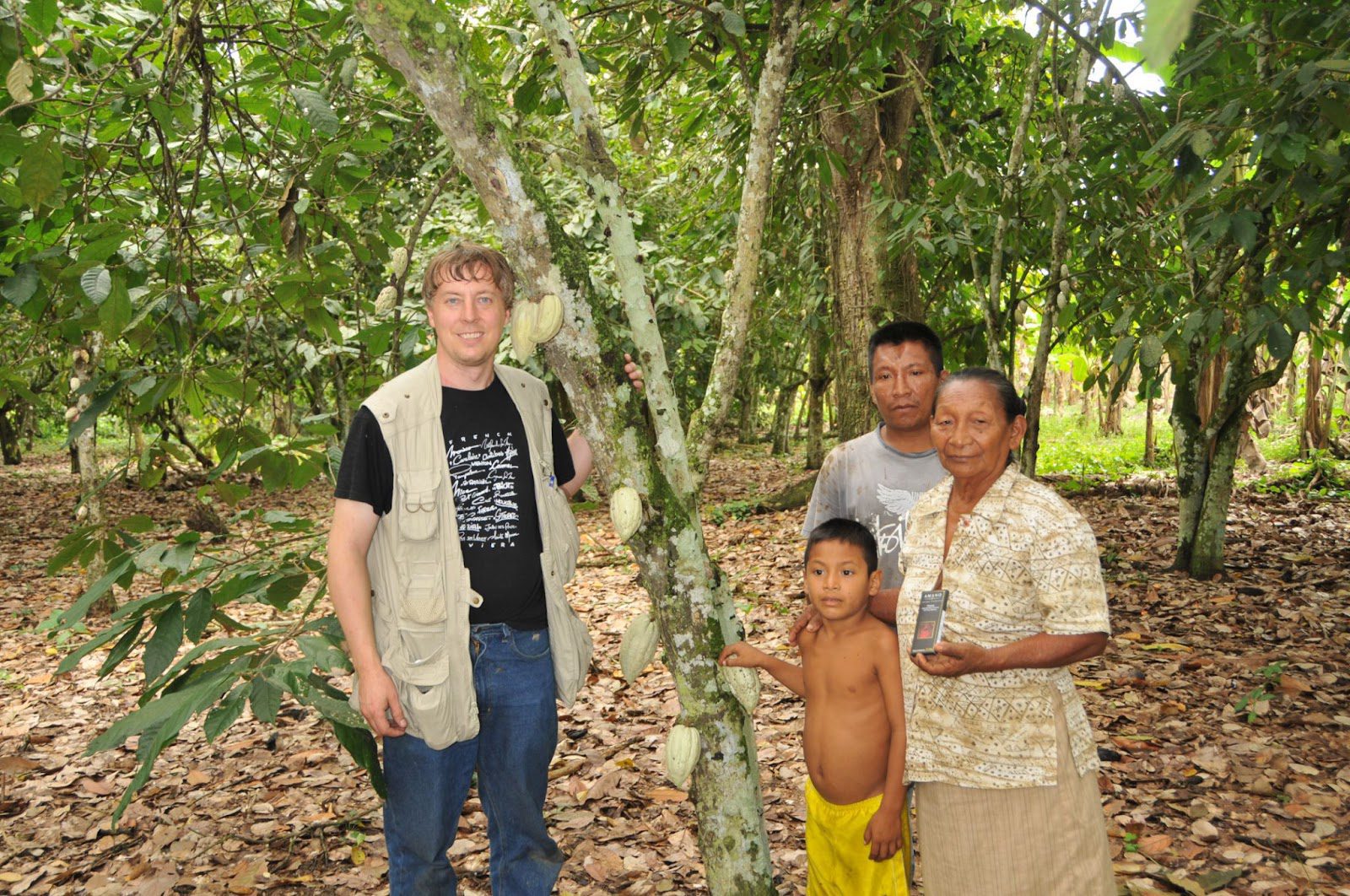
A man and two children stand together beside a large tree in a sunny outdoor setting.

Exceptional chocolate begins long before it touches a roaster. It starts with the cacao bean and begins where and how that bean is grown. 

Soil composition, elevation, rainfall patterns, and temperature all shape the bean’s character. This is known as terroir, a term often associated with wine, but is as critical in chocolate. Cacao grown in the lush valleys of Ecuador produces a flavor profile entirely different from beans harvested in Madagascar or Venezuela. 

The environment infuses each bean with a distinct fingerprint of flavor — fruity, floral, nutty, or earthy — depending on its origin.

The process starts by building strong, lasting relationships with farmers worldwide. Artisans work directly with growers who produce high-quality cacao and are committed to sustainable farming practices. These partnerships ensure transparency, fair compensation, and environmentally responsible cultivation. 

Supporting ethical sourcing contributes to healthier communities and more resilient farming systems, which in turn result in better beans and richer chocolate.

Each origin brings something extraordinary to the table. From the deep, wine-like notes of beans in Ocumare, Venezuela, to the bright, citrusy tones found in Madagascar’s Sambirano Valley, every region offers a unique flavor experience. 

Artisan chocolate bars reflect these subtle nuances, allowing chocolate lovers to taste the difference terroir makes. With each bite, you’re experiencing a story rooted in place, people, and tradition.

Fermentation and drying: Where flavor begins

The journey from bean to bar truly begins with fermentation. Once cacao pods are harvested, the beans inside must be fermented to unlock their full flavor potential. Without fermentation, chocolate would taste flat, bitter, and one-dimensional. This step sets the stage for every flavor note you experience later on.

During fermentation, natural yeasts and bacteria break down the sugary pulp surrounding the beans. This process typically takes from several days to a week and involves carefully turning or mixing the beans to ensure even fermentation. Temperature, humidity, and timing all influence the outcome. 

When done correctly, fermentation develops the complex fruitiness, acidity, richness, and depth of flavors that define high-quality chocolate.

After fermentation, the beans need to dry slowly and evenly. Proper drying locks in the flavor, reduces moisture to prevent spoilage, and prepares the beans for transport. Beans are often spread out under the sun on raised beds or patios and stirred regularly to ensure consistency. Rushed or improper drying can lead to mold or off-flavors, compromising the entire batch.

In artisan chocolate production, these steps are handled with care and intention. Fermentation methods are tailored to the specific cacao variety and climate. Drying is often monitored closely by the farmers who grow the beans. 

By contrast, industrial producers tend to use faster, less precise methods that sacrifice flavor for volume and speed. This is one of the key differences that sets artisan chocolate apart. Every step honors the bean and enhances its natural character.

When these early steps are done right, the result is chocolate with soul, complexity, and a story worth tasting.

Roasting: Unlocking complexity

Roasting is where the magic begins to take shape. This stage transforms fermented and dried cacao beans into the foundation of fine chocolate. Much like roasting coffee, the process releases aroma, deepens flavor, and builds complexity. However, in chocolate, the margin for error is even smaller.

Artisan chocolatiers approach roasting as both a science and an art. Each batch is roasted in small quantities to maintain complete control over time and temperature. This level of attention allows us to highlight the unique flavor profile of every origin. 

Some beans respond best to a light roast that preserves their fruity brightness. Others require a deeper roast to unlock warm, nutty undertones or bold, earthy richness.

Unlike industrial chocolate producers, who use a uniform roast to simplify production, artisans craft roast profiles tailored to each specific bean. This customization brings out the subtle, layered notes that define artisan chocolate and ensures no origin tastes like another.

If you’re familiar with specialty coffee, the concept will feel similar. Coffee roasters often adjust their approach depending on the bean’s altitude, density, and origin to bring out the best in every cup. Chocolate roasting follows that same philosophy. The more carefully it’s done, the more vibrant and expressive the final result is.

Roasting reveals the soul of the bean. When done with precision and purpose, this step lays the groundwork for a bar of chocolate that tastes as beautiful as it smells.

Grinding and conching: Texture meets taste

After roasting, cacao beans enter a critical stage that shapes the texture and flavor of the final chocolate. This is where grinding and conching come into play — two processes that define the mouthfeel, aroma, and overall eating experience.

Grinding begins by breaking the roasted beans into nibs and refining them into a thick, liquid mass called chocolate liquor. Stone grinding allows for a slow, gentle process that preserves flavor and ensures a luxuriously smooth texture. 

Unlike industrial steel rollers prioritizing speed and output, stone grinders carefully reduce particle size without generating excess heat, which can dull flavor and flatten complexity.

Once ground to the perfect consistency, the chocolate enters the conching phase. Conching involves mixing, aerating, and kneading the chocolate over extended periods. This process smooths the texture, mellows acidity, and brings the flavor into balance. Conching also allows volatile compounds to evaporate, resulting in a more refined and harmonious taste.

The length of conching varies depending on the bean’s origin and the desired flavor profile. Some chocolates benefit from shorter times to preserve bright, fruity notes. Others develop more depth and richness with prolonged conching. In either case, the key ingredient is patience.

Time allows the chocolate to evolve. It gives the flavors space to breathe and settle. Rushing this step leads to flat, one-dimensional chocolate, while careful, extended conching coaxes out nuance, elegance, and finish.

Tempering and molding: The final transformation

Tempering is the moment where precision meets beauty. This step gives chocolate its glossy finish, satisfying snap, and smooth, melt-on-the-tongue feel. Without tempering, chocolate appears dull, feels grainy, and lacks the professional quality artisan makers strive to achieve.

Tempering involves heating and cooling the chocolate to specific temperatures to stabilize the cocoa butter crystals. These crystals determine the texture and appearance of the finished bar. When done correctly, tempering ensures that chocolate remains firm at room temperature, breaks cleanly, and delivers a luxurious mouthfeel.

Once perfectly tempered, the chocolate moves to molding. Each mold is carefully filled to ensure consistency in weight and shape. The molds are designed with elegance in mind, offering clean lines and a premium feel.

From our hands to yours: The artisan difference

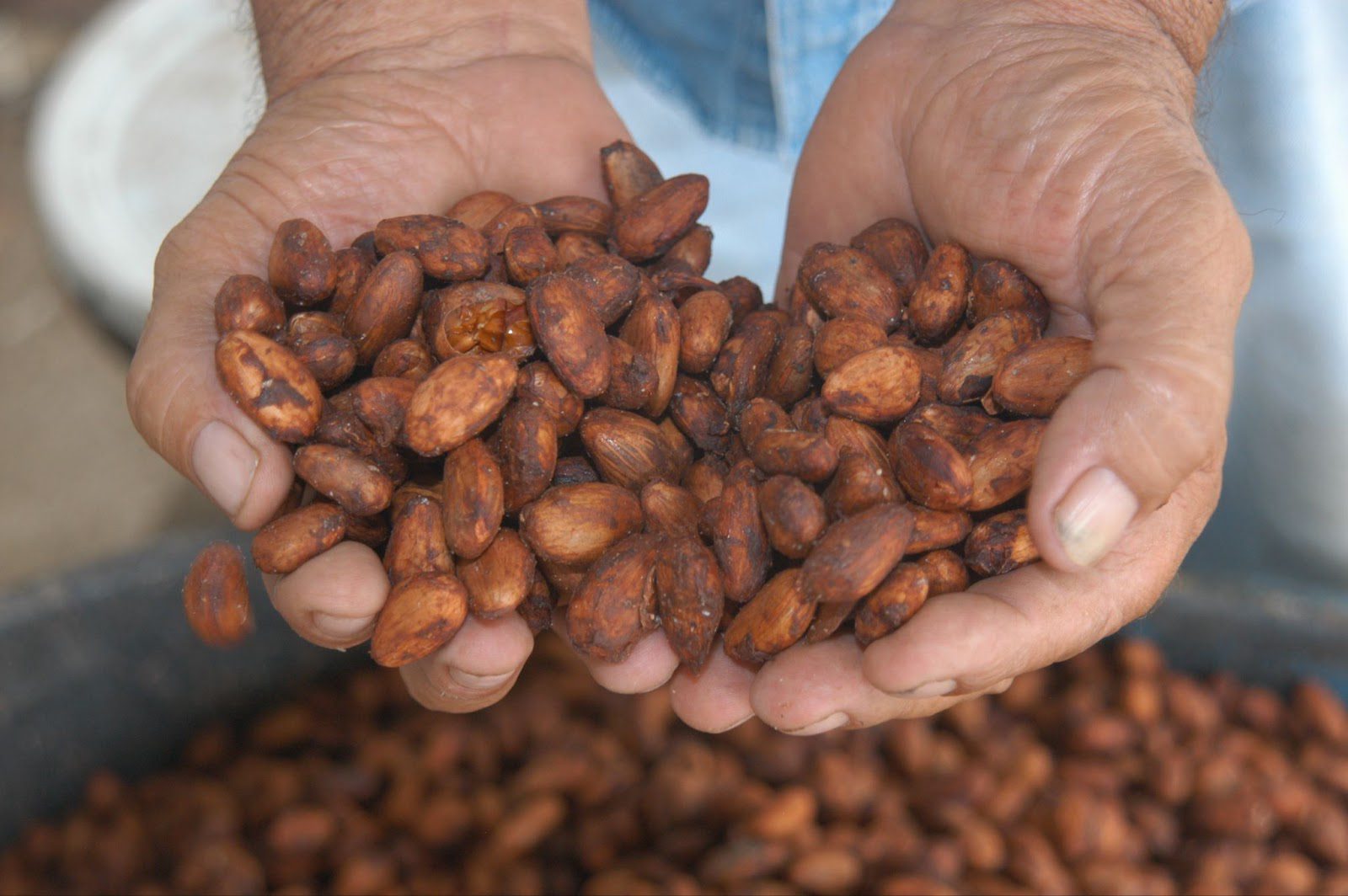
Hands holding roasted cocoa beans over a pile of more beans.

Small-batch chocolate is a method rooted in respect. Every step in the bean-to-bar journey honors the bean, the farmer who grew it, and the hands that bring it to life. At Amano Chocolate, we choose quality over quantity, purpose over shortcuts, and flavor over flash.

This commitment starts with direct relationships. We work closely with farmers who care deeply about their land and their craft. Their expertise and dedication shape the character of the cacao we receive. In return, we pay fair prices and celebrate the origins of every bean, ensuring a cycle of respect and sustainability.

Crafting chocolate in small batches allows us to control every detail. We roast with precision, grind slowly, conch with care, and temper to perfection. This deliberate approach brings out flavor notes you won’t find in mass-produced chocolate. Each bar tells a story, rich with origin and layered with complexity.

We invite you to slow down and taste with intention. Let the chocolate melt on your tongue. Notice the way flavors unfold. Compare the differences between origins. This is how chocolate was meant to be experienced — not rushed or devoured, but savored like fine wine or aged cheese.

Choosing artisan chocolate supports a world of craftsmanship, transparency, and heart. You value the story behind the flavor and the people who made it possible. Most importantly, you help preserve a tradition that transforms something simple into something extraordinary. 

Frequently asked questions

What is the difference between dark, milk, and white chocolate?

Dark chocolate contains a high percentage of cacao solids and cocoa butter, with little or no added milk. It has a bold, intense flavor. Milk chocolate includes cacao, cocoa butter, sugar, and milk solids, which create a creamier and sweeter taste. White chocolate contains cocoa butter, powdered milk, and sugar but no cacao solids, giving it a smooth, buttery flavor with no bitterness.

Does artisan chocolate contain any additives or preservatives?

Authentic artisan chocolate, like the bars crafted by Amano, is made with minimal ingredients. You’ll typically find cacao beans, cane sugar, and sometimes cocoa butter or milk. There are no artificial ingredients, no preservatives, and no unnecessary fillers. This purity allows the natural flavors of the cacao to shine.

How should I store artisan chocolate to keep it fresh?

Store your chocolate in a cool, dry place away from direct sunlight and strong odors. Ideal temperature ranges between 60°F and 70°F. Avoid refrigeration, as it can cause condensation and affect the texture and flavor. A pantry or cupboard works best.

Why does my chocolate have a white coating on it?

This is called “bloom,” and it happens when the cocoa butter separates and rises to the surface due to temperature changes. It may look dusty or streaky, but it’s perfectly safe to eat. Bloom affects appearance and texture but not flavor.

Can I pair artisan chocolate with food or drinks?

Absolutely. High-quality chocolate pairs beautifully with wine, coffee, whiskey, tea, and cheese. Try pairing a fruity chocolate with a bold red wine or a nutty bar with a strong espresso. The right combination can enhance the tasting experience and highlight subtle flavor notes.

Is artisan chocolate vegan or dairy-free?

Many dark chocolate bars are naturally vegan and dairy-free, but it depends on the recipe. At Amano, ingredient transparency is a priority. Always check the label or product description to verify whether a specific bar meets your dietary preferences.

How long does artisan chocolate last?

Unopened chocolate stored properly can last from several months to even a year or more. It all depends on how well it is stored. Over time, some flavor degradation may occur, especially with delicate origin notes, so we recommend enjoying it while it’s fresh for the best experience.

Do cacao percentages really matter?

Yes. The percentage listed on the packaging refers to the total cacao content, which includes both cacao solids and cocoa butter. Higher percentages usually mean more intense chocolate flavor and less sugar. 

However, quality matters more than numbers; a well-crafted 70% bar may taste more balanced than a poorly made 85% one.

Experience what chocolate should be with Amano Chocolate

Amano Artisan Chocolate Single Origin Gourmet Chocolate bars on cocoa beans

From the rich soils of distant cacao farms to the final, hand-wrapped bar, the journey of bean-to-bar chocolate is one of precision, patience, and passion. Every step matters. Each decision shapes the flavor, texture, and soul of the chocolate you experience.

At Amano Chocolate, this journey is more than a process — it’s a promise. We source the finest cacao in the world, honor the farmers behind every bean, and craft our chocolate with uncompromising care. The result is a bar that tastes better and feels better. You’re tasting a story, an origin, and a tradition brought to life by true artisans.

If you’re ready to become a chocolate lover and explore the difference that craftsmanship makes, we invite you to taste Amano Chocolate. Slow down, savor every bite, and discover what real chocolate was always meant to be.

For more information, don’t hesitate to contact Amano Chocolate with any questions or requests you may have!

Types of Cocoa Bean Roasters

Chocolate making factory worker putting cocoa beans in a roaster

Roasting Cocoa Part III

It is not hard to imagine that once in an Olmec village in Central America some cocoa beans were accidentally spilled near the fire, or some genius had the spark of inspiration to roast cocoa beans, an oversight that sent their culture and eventually the rest of the world on the chocolate journey that consumes us like the spark of the fire from that very first roast. In either case, the first cocoa beans were probably roasted on rocks alongside the fire, on a rock slab over the fire, or possibly in a clay pot. Whatever the original method of roasting, it created a legacy that lasts until today.

When cocoa beans were first brought to Europe, the method of roasting was quite simple, often consisting of no more than metal trays suspended by chains over a fire, an ancient Middle Eastern technique for roasting coffee. The beans would be stirred by hand with a long stick or paddle until the roast was complete. Needless to day, this was very labor intensive and inefficient. Clearly, something more efficient was needed.

The next development in roasting technology was not that far distant from roasters in use today. Metal cylinders or balls that could hold up to several pounds of cocoa beans would be suspended over the embers of a fire. A rod would run through the center and act as an axis upon which the roaster would turn. A hand crank on one end would allow the cylinder or ball to be turned while the beans were roasting. The result was a much more even roast than was before possible. Aspects of this technique remain in many of today’s roasters.

Ball Roasters

As mentioned, all roasters were one of the very first kinds of roaster: balls were simply suspended simply over a fire, the cocoa beans inside. Ball roasters remained one of the primary and traditional roasters for cocoa beans through the turn of the century and were constructed at least through the 1960’s. Later designs were pioneered by the company Sirocco. (Sirocco is named after the hot wind that travels up from the Sahara desert and heads north and may reach hurricane speeds by the time it reaches northern Africa, Spain and France.) The ball is encircled within a secondary chamber so that the hot air passes in between the ball and the outer chamber wall. This prevents the flames from impinging directly on the ball and makes it easier to over roast the beans.

Today, ball roasters have been largely replaced by roasters of similar design that use a rotating cylinder rather than a rotating ball. There are a number of practical advantages of this design, since the shape of a cylinder with two ends makes it easier for samples to be removed. It also allows for easier measurement of the temperature of the beans if automation is a requirement. Ball roasters still hold advantage when flavor is of paramount importance.

Fluid Bed Roasters

Fluid bed roasters are a relatively new development. There are a number of different designs, some of them radically different. What they all have in common is that air is blown up through the beans, suspending them at least temporarily in air. The bottom of the roaster may vibrate to help launch the beans into the air. Fluid-bed roasters are typically used in large industrial environments, since they are conducive to short, high-temperature roasting that allows large volumes of beans to be roasted in a short period of time.

Continuous Roasters

The large chocolate manufacturers rely on continuous roasters. Given the quantity of beans that must be roasted for a large industrial chocolate manufacturer and the relatively low prices of industrial chocolate, they are probably one of the only economical ways to roast the large quantity of beans that must be roasted.

There are many different styles of continuous roaster, though in general they fall into two different categories. In one style, the beans are passed on a conveyer belt through a roasting tunnel. The degree of roast can be controlled by controlling the temperature in the tunnel as well as the speed of the conveyer belt. The heat is applied to the beans in a consistent way throughout the roasting process. Alternatively, another style uses a tall tower into which the beans are fed into the top. The tower has a series of trays upon which the beans rest. Once the beans have roasted on one tray for a given period of time, they are dumped onto the next tray. By the time the beans reach the bottom of the tower, they are fully roasted. The airflow through the tower is from the bottom up. The beans cool the air as the air passes them, at the same time heating the beans. This means that the beans on the lower levels are heated faster than those at the top. Because of this, they will generate a different flavor profile in the finished chocolate. It should be pointed out that there are also continuous fluid-bed roasters.

One disadvantage of this kind of roaster is that it is relatively difficult to pull samples of the beans from the roaster while they are being roasted. Furthermore, if the beans are found to be properly roasted when they are only partially through the roaster, there is no way to quickly remove them from the roaster and get them into a cooler. On the other hand, the large industrial chocolate makers run such large quantities of beans, this process can be fine tuned for a particular type of bean. Furthermore, most of these manufacturers use Forestero beans almost exclusively, for which the degree of roast is not as critical as it is with Criollo and other types of high-grade flavor beans.

Cocoa Mass Roasters

These have already been discussed, but to recap, cocoa mass roasters are basically tanks in which the ground cocoa bean paste (cocoa mass) is heated as it is stirred until the desired level of roast is reached. It may also be implemented as a large heated cylinder where the cocoa mass is spread in a thin film. Since the film is thin, it roasts very quickly, and a thin knife blade scrapes it off of the far side of the cylinder. Cocoa-mass roasters are used by the large industrial chocolate manufacturers as a way to quickly roast large quantities of cocoa beans with minimal labor, since it is also a process that by nature requires little labor, and it also lends itself to easy automation.

Roasted Coco Beans
The Conclusion — Roasted Cocoa Beans. (Venezuelan Cuyagua)

We won’t get into the many other roasting technologies, such as infrared and microwave. There are even combinations of the various kinds, such as continuous fluid bed roasters. No matter the technology, the best roaster is the one best suited to the job. With poor quality beans, cocoa mass roasters and continuous roasters, or even coffee roasters, will often suffice, since the beans’ flavors are already considerably damaged; no matter the care, the lost flavors may not be brought back. However, if fine flavor is to be developed in the finished chocolate, the choice of roaster is much more critical, as are the techniques used to roast the cocoa beans. Different beans and different styles of chocolate have different roasting requirements, so care must be taken to select the roaster that will best bring the final result, be it high production quantity, as is the case for the large industrial manufacturers, or fine flavor for the artisanal chocolate makers.

Conclusion

Roasting truly is one of the chocolate maker’s arts. It takes a fine flavor palate to be able to judge a roast and judge how the roasted cocoa bean will taste when it is turned into fine chocolate. An incredible number of flavor changes occur during the time the cocoa beans are roasted. Even after the chocolate is complete—even as the chocolate is “resting” and undergoing its final stages of flavor development—the flavors continue to change. The resting process continues oftentimes for several months. The chocolate maker who seeks for optimal flavor must not only think about the flavor of the bean as it is being roasted but must think about how the flavors will change as the chocolate is being made and how the chocolate will taste after it has rested. The flavors will be radically different, and new flavor profiles will often express themselves. Roasting is a bit of a secret art. There are no guidelines on how the best cocoa roasts are to be obtained. It must be learned through experience and through many tests and trials—many of which result in failure. However, this is the case with most all great artistic skills, and the cocoa bean roaster is truly an artist—an artist in flavor. The roaster is an artist who uses one of the world’s greatest sources of flavor and noblest of ingredients—the cocoa bean, also known as “the food of the gods.”

Cocoa Fermentation — All About It: Part 1

Close-up of cocoa beans fermenting in wooden boxes with steam rising, set against a backdrop of lush green foliage

Cocoa Fermentation — Bringing Magic to the Cocoa

After the farmers have harvested the cocoa pods from the tree, some of the most crucial work begins to make fine, high-grade chocolate. The beans must be carefully fermented to bring out the very best flavors. It is unfortunate that the process of proper fermentation is under-appreciated both by the public and the farmer alike. However, to the artisanal chocolatier, proper cocoa fermentation is critically important. Chocolate made from unfermented cocoa beans does not have the body and richness as chocolate made from fermented cocoa beans. Chocolate does continue to be made from unfermented beans in parts of Mexico and Central America for use in traditional dishes. Cocoa fermentation also helps remove the tannins present in the cacao bean. Depending on the study, the amount of tannins in each bean is between five and fifteen percent of the bean by weight. Tannins bring an astringent flavor to the final chocolate and must be removed. Other compounds within the cocoa bean also detract from the taste of the final chocolate that proper fermentation also helps to remove. While roasting and conching helps remove the tannins through oxidation and other processes, the fewer tannins that are in the bean to begin with, the easier it is for the chocolatier to achieve an optimal flavor profile. Rather than having to be concerned with how to best remove the tannins — processes that may hurt the end-flavor profile — the chocolatier is able to concentrate more fully on bringing out the optimal flavors from beans to make the best chocolate possible. Unfortunately, the farmer is in most cases not a chocolate maker. Because of this, many farmers perform the cocoa fermentation only because that is what the market demands without fully understanding what improper cocoa fermentation does to the final chocolate or what wonders proper fermentation may bring. The problem is compounded by the mass-market chocolate companies that purchase the beans without particular regard to the degree of cocoa fermentation or even how consistently fermented the beans are. Of course, at Amano Artisan Chocolate, we are careful to work with our growers to ensure that the optimal fermentation is performed on all the beans we buy.

The Cocoa Fermentation Begins

A cocoa farmer moving fermenting cacao beans from one cocoa fermentation box to another

Each cacao pod holds approximately 40 beans, and they must be carefully removed from the pods to ensure that the beans are not injured in the process. Some farmers will use machetes to open the pods, but this can damage the beans and causes quality problems in the product during fermentation and roasting. Farmers who are more careful will quickly rap the cocoa pod on a rock or tree, and the pod will quickly and easily break open, allowing the beans to be scooped out without damage. When they are first removed from the pod, the beans have a white, mucilage-like coating around each bean. It is sweet and yet tart. It’s a bit like a very sweet lemon and is incredibly refreshing on a hot tropical day. This coating provides a food source for the bean as it germinates. It also provides the sugar needed as the basis for the fermentation process that each bean will undergo. The beans are scooped out of the pods and then collected together for fermenting in one or more cocoa fermentation boxes or “sweatboxes.” The sweatboxes used for cocoa fermentation may be located at the plantation or may be located at the local co-op, where the beans are mixed with beans from other local farms during and after fermentation. No matter the location of the sweatboxes, it is important that this happen as quickly as possible, since the beans begin to germinate as soon as the fruit has been picked. If the germination process is allowed to progress too far, the beans will turn bitter, and the bitterness cannot be removed with further processing. As with most organic material, fermentation begins almost immediately upon exposure to air. Cocoa fermentation is no different. Spores from naturally occurring yeasts (Saccharomyces) settle on the sugary beans and start to split the sugar into alcohol and carbon dioxide. The alcohol is split further into acetic acid by the same bacteria that are responsible for turning wine into vinegar, the Mycoderma aceti. The chocolate maker must later remove the acetic acid that is generated through cocoa fermentation.

Historical black-and-white photo of workers fermenting cocoa beans in a large indoor facility with wooden fermentation boxes, large windows, and scattered beans on the floor.
Stepped cocoa fermentation boxes in Java circa 1900

The fermentation’s chemical changes occur both outside and inside the bean. The sweet mucilage-like coating on each bean spurs the fermentation that takes place outside the bean. Given the incredible amount of fermentation going on, the temperature rises quickly. In fact, during the cocoa’s fermentation temperatures can climb to 122F (48 C), so hot that if you were to put your hand into the sticky gooey mass of beans, you would not be able to leave it there for very long. On the second day of fermentation, the temperature reaches 113F (43 C), where the germ within the cacao bean dies from the heat, alcohol, and acetic acid. When the germ dies, important chemical changes begin as enzymes within the bean itself are released. These are important to the development of the chocolate flavor. The beans must also be rotated within the sweatboxes. This is normally done by transferring the beans from one sweatbox to another. In the process, if they are rotated too frequently, they will get too much oxygen, and the beans will become too hot and develop dark spots. On the other hand, if they are rotated too infrequently, the cocoa beans will ferment inconsistently, since the beans in the interior of the sweatbox will get less oxygen than those on the sides. As with most things, to get it just right requires an artist’s skill.