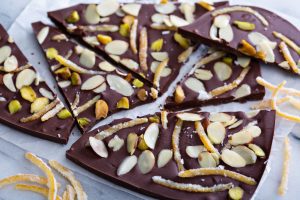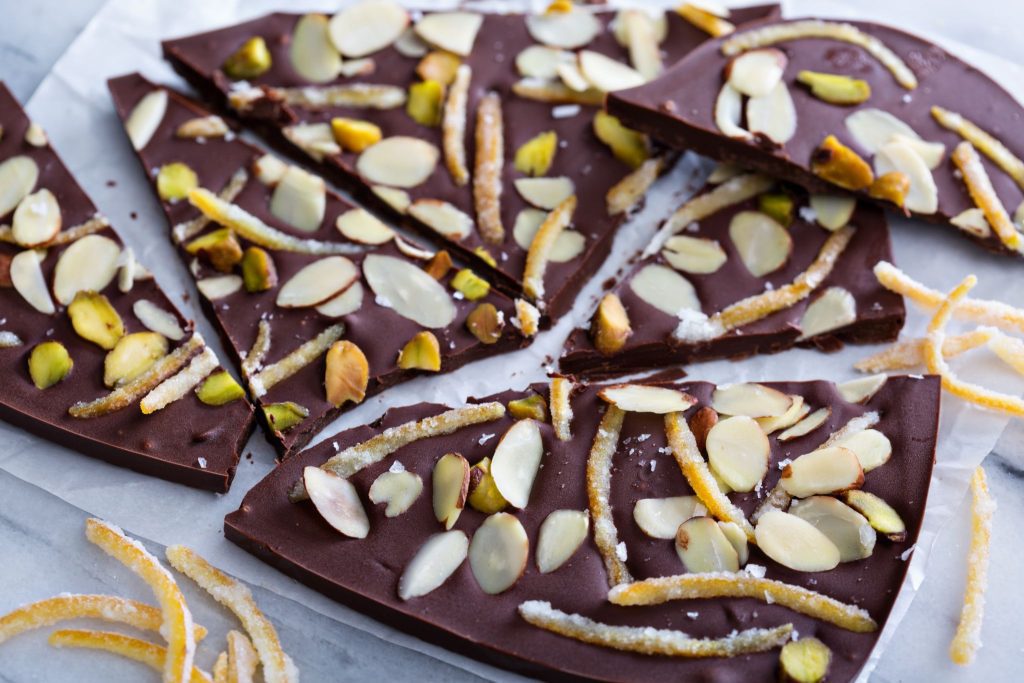
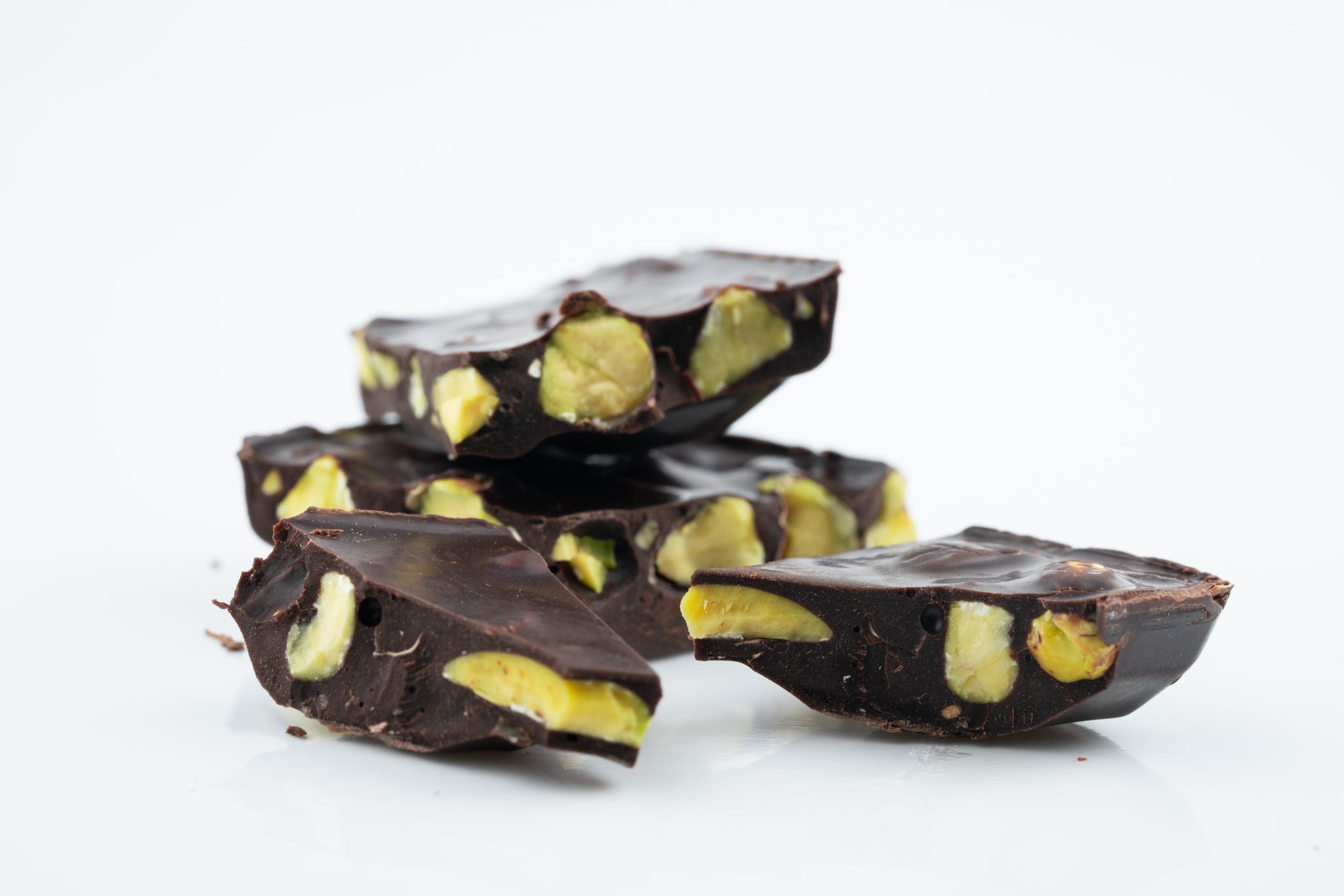
Pistachio chocolate bark turns a few good ingredients into a polished dessert with little effort. Gently melt the dark chocolate, spread it over parchment, then add roasted pistachios and flaky sea salt before chilling until firm. The recipe takes less than 30 minutes of active work and requires no special equipment.
Why simple ingredients make better chocolate bark
Chocolate bark looks impressive, but the method stays simple. Roasted pistachios add savory nuttiness, while flaky salt sharpens the contrast.
Artisan chocolate makes an especially noticeable difference because nothing hides the cacao. The Madagascar 70% dark chocolate bar brings brighter fruit character, while Ocumare Village takes the bark in a deeper direction.
Why this pistachio chocolate bark works
The appeal comes from contrast. A dark chocolate bar gives the bark a firm base and clear cocoa flavor. Pistachios bring roasted warmth with a slightly savory edge. Flaky sea salt lifts both flavors without making the bark taste overly sweet.
The short ingredient list also makes quality easier to notice. With only a few additions, the cacao still leads the experience. That makes this recipe a useful way to compare chocolates from different origins.
Salted dark chocolate bark with pistachios
Ingredients
- 2 Amano dark chocolate bars, such as Madagascar 70% or Ocumare Village, roughly chopped
- 1/2 cup roasted salted pistachios, roughly chopped
- 1 teaspoon flaky sea salt, such as Maldon
- 2 tablespoons dried tart cherries or food-grade edible rose petals, optional
1. Prep the pan
Line a rimmed baking sheet with parchment paper. Keep your work surface completely dry, as even a small amount of water can cause melted chocolate to seize.
2. Melt the chocolate
Place the chopped chocolate in a heatproof bowl. Microwave it in 20-second bursts, stirring well after each round.
Stop heating when about three-quarters of the chocolate has melted. Small pieces should still remain. Stir continuously and let the residual heat finish melting them. This gentle approach gives you more control and helps protect the chocolate from overheating.
3. Spread the chocolate
Pour the melted chocolate onto the parchment. Use an offset spatula or the back of a spoon to spread it into an even layer about 1/4 inch thick.
Don’t worry about perfect edges. Bark suits a natural shape, and each broken piece will look a little different.
4. Add the toppings
Scatter the pistachios over the chocolate while the surface still feels soft. Add dried tart cherries or edible rose petals for garnish.
Finish with flaky sea salt. If the pistachios already taste quite salty, start with less and add more before the chocolate sets if needed.
5. Set the bark
Place the pan in the refrigerator and chill the chocolate until it feels completely firm.
6. Break and serve
Lift the parchment from the pan and break the bark into irregular pieces by hand.
Store the bark in an airtight container in a cool room. Refrigerate it during warm weather, then let it lose some of its chill before serving.
Choosing the right chocolate for chocolate bark
A simple recipe focuses more on the chocolate itself, so the dark chocolate bar you choose determines the finished flavor.
Amano Madagascar 70% brings a bright fruit character that works especially well with roasted pistachios. The nuts give those higher notes a savory counterpoint without covering them.
Ocumare Village takes the recipe in another direction. Its deeper character changes the contrast with the pistachios and creates a different finish.
Artisan chocolate adds more depth to the recipe because the cacao origin still comes through clearly in the finished bark. Try a small batch with each bar and compare them side by side.
Tips for better chocolate bark
A few small choices make the process smoother.
- Chop the chocolate into similar-sized pieces.
- Keep every bowl and utensil dry.
- Stop microwaving before every piece melts.
- Add toppings while the chocolate still looks glossy.
- Let freshly roasted nuts cool first.
- Taste salted pistachios before adding the finishing salt.
Common chocolate bark mistakes
- Overheating the chocolate: Use short microwave bursts, stirring between each one. This gives you more control and helps the chocolate melt evenly.
- Getting water in the chocolate: Keep every bowl and utensil completely dry. Even a small amount of moisture may make the chocolate thick or grainy.
- Waiting too long to add the pistachios: Add the nuts while the chocolate still feels soft so they settle into the surface and stay in place.
- Spreading the bark too thick: Aim for a layer about 1/4 inch thick. A thinner layer gives the bark a cleaner snap and makes it easier to break.
- Adding too much salt: Taste the pistachios first. If they already taste quite salty, use a lighter sprinkle of flaky salt.
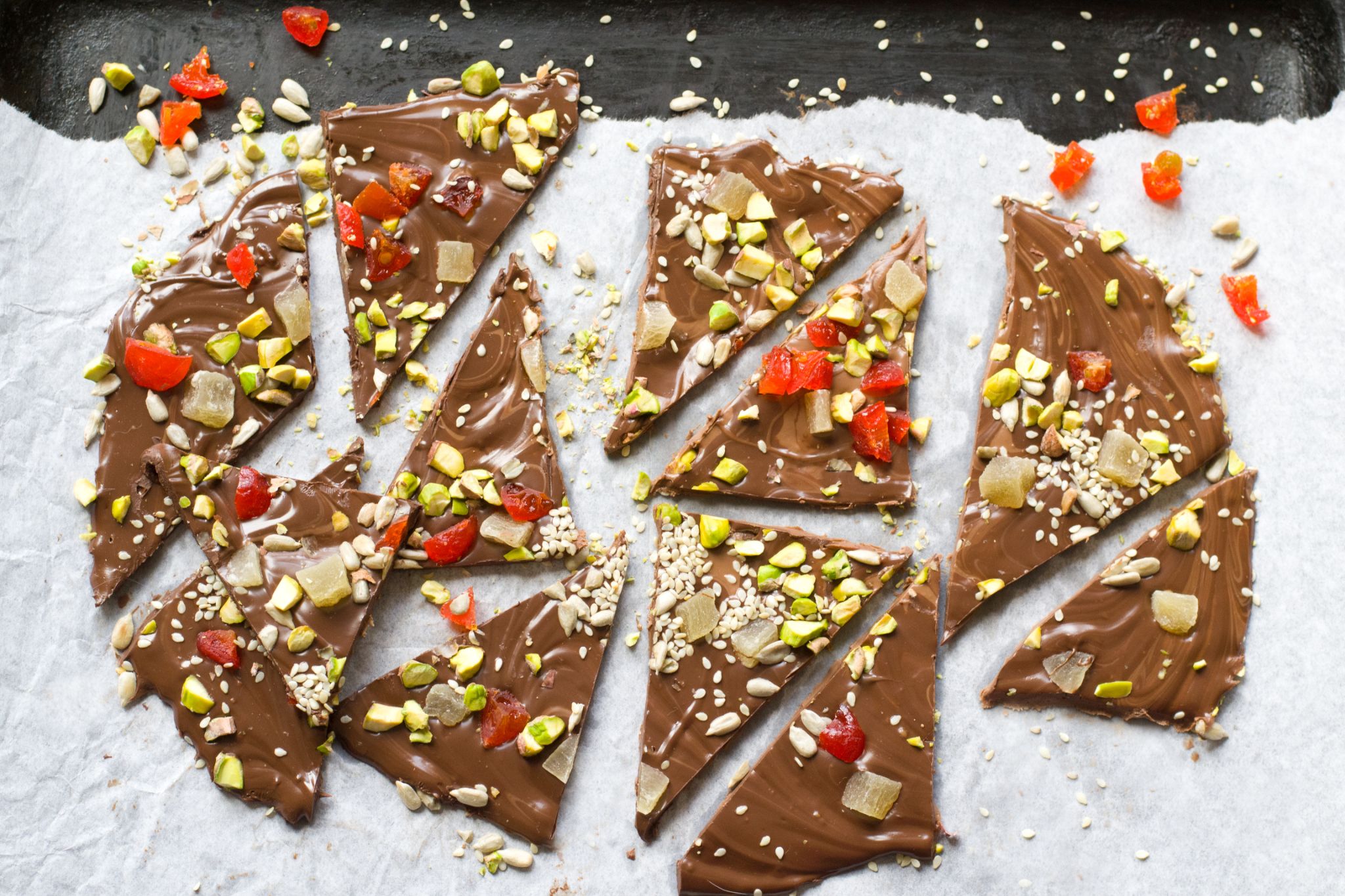
Easy pistachio chocolate bark variations
Small changes give the bark a different flavor without complicating the recipe.
- Toasted almonds: Swap them for pistachios for a gentler nut flavor.
- Roasted hazelnuts: Add a deeper, toastier character.
- Candied orange peel: Bring in bright citrus with a slightly chewy texture.
- Dried tart cherries: Add acidity and a little extra color.
- Edible rose petals: Use food-grade petals for a light floral garnish.
- White chocolate: Add a light drizzle for visual contrast.
Keep the toppings restrained so the chocolate still takes the lead. That balance matters even more when you use artisan chocolate with a distinct origin profile.
Frequently asked questions
Do you need to temper chocolate for chocolate bark?
No. This easy method relies on gentle melting rather than full tempering. Traditional tempering gives you more control over gloss and snap, but it requires closer temperature management.
What type of chocolate works best for chocolate bark?
Choose chocolate that tastes good on its own because its flavor stays prominent. A single-origin dark chocolate bar works especially well when you want the cacao character to remain clear.
Should I use salted or unsalted pistachios?
Either works. Salted pistachios add more savory contrast, while unsalted pistachios give you greater control over the finishing salt.
Why did my melted chocolate turn thick or grainy?
Moisture often causes this problem. Excessive heat may also damage the texture. Keep your tools dry and use short heating intervals.
Why isn’t my chocolate bark hardening?
The room may feel too warm. Move the bark to the refrigerator until it firms, then store it somewhere cool.
How long does homemade chocolate bark last?
Store it in an airtight container for up to two weeks. Keep it away from heat and moisture.
Should chocolate bark stay in the refrigerator?
A cool room works well for storage. Use the refrigerator when your kitchen runs warm, but keep the bark covered.
Is chocolate bark a good make-ahead dessert?
Yes. Make it several days before serving or gifting, then keep it in an airtight container until you need it.
Make simple ingredients more interesting with Amano Chocolate
Pistachio chocolate bark keeps the process simple while letting the chocolate take the lead. The cacao origin still comes through clearly, giving each batch its own flavor profile.
Try the recipe with different Amano bars and compare the results. One batch may lean brighter, while another brings more cocoa depth. Explore Amano’s single-origin collection to choose an artisan chocolate for your next batch and see how a different origin changes the experience.