How to Build the Ultimate Artisan Chocolate Charcuterie Board

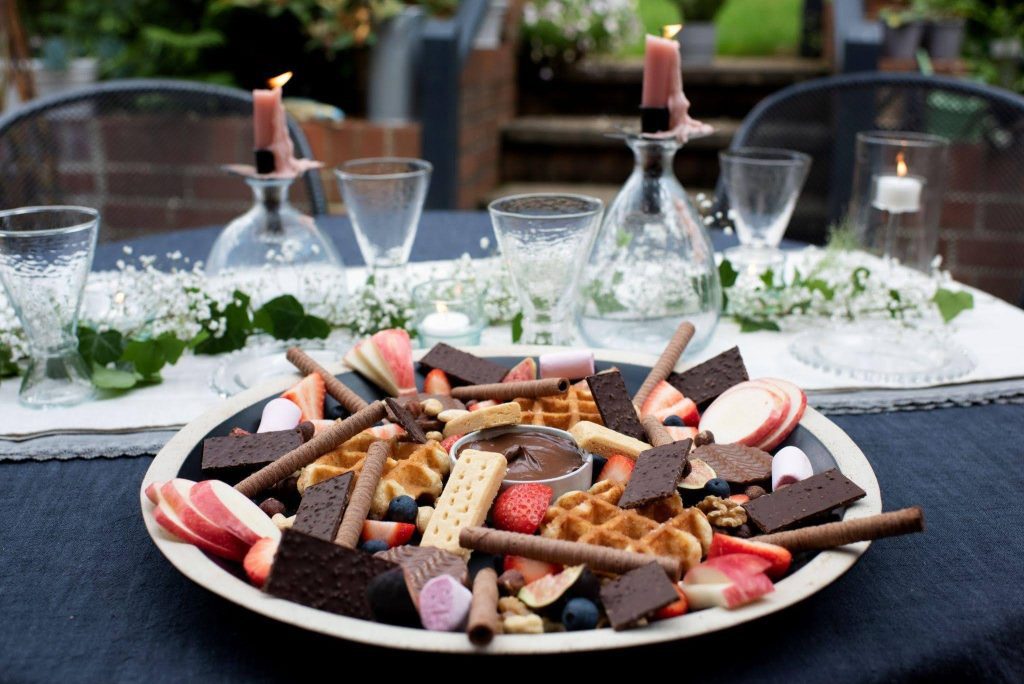
A wooden tray displaying an assortment of foods including fruits cheeses and snacks

A chocolate charcuterie board is a dessert board built around chocolate, fruit, nuts, crackers, honeycomb, cheese, and small sweets. To build one well, choose a few artisan chocolate bars, pair them with accompaniments that bring out their flavors and textures, arrange everything in balanced sections, and serve it like a guided tasting.

A better way to serve chocolate

A generous dessert board should feel inviting and intentional. The best boards create contrast with the clean snap of a dark chocolate bar, bright fruit, toasted nuts, and gentle sweetness from honeycomb. A well-built chocolate charcuterie board lets guests compare flavor, texture, melt, and finish without a formal tasting setup.

What is a chocolate charcuterie board?

A chocolate charcuterie board is a dessert board centered on chocolate, fruit, nuts, crackers, honeycomb, spreads, and small sweets. The best boards keep chocolate as the focus and use simple pairings to bring out tasting notes, texture, and finish. With artisan chocolate, it becomes a relaxed tasting experience built around flavor and origin.

How to build your chocolate charcuterie board

1. Choose the chocolate first

Start with three to five options, such as a dark chocolate bar, a milk or mellow bar, and a flavored chocolate. Choose distinct flavor profiles so guests can compare each one.

2. Add fresh and dried fruit

Use strawberries, raspberries, cherries, oranges, pears, or apples for brightness. Add figs, apricots, dates, or dried cherries for chew and deeper sweetness.

3. Bring in crunch and salt

Add toasted nuts, pretzels, biscotti, shortbread, or crackers. A little salt balances sweetness and rounds out the flavor of darker chocolate.

4. Add creamy elements

Use brie, goat cheese, mascarpone, ricotta with honey, or mild aged cheddar. Keep stronger cheeses light so they don’t overpower the chocolate.

5. Finish with small accents

Set out honeycomb, caramel, preserves, cacao nibs, or flaky salt in small bowls for easy pairing.

6. Arrange by flavor strength

Place lighter or fruitier chocolate first, then move toward deeper, more intense bars. This helps guests taste each chocolate clearly.

What goes on a chocolate charcuterie board?

A strong chocolate charcuterie board includes a mix of flavors, textures, and colors. Use these categories as a starting point:

Chocolate

  • Single-origin chocolate bars
  • Milk chocolate
  • Flavored chocolate
  • Truffles
  • Chocolate bark
  • Chocolate-covered almonds or cherries

Fruit

  • Strawberries
  • Raspberries
  • Cherries
  • Orange slices
  • Pear or apple slices
  • Dried figs
  • Dried apricots
  • Dates

Nuts

  • Almonds
  • Hazelnuts
  • Pistachios
  • Pecans
  • Walnuts
  • Candied nuts

Crunchy pairings

  • Water crackers
  • Shortbread
  • Biscotti
  • Pretzels
  • Crostini
  • Graham crackers

Creamy pairings

  • Brie
  • Goat cheese
  • Mascarpone
  • Ricotta with honey
  • Mild aged cheddar

Accents

  • Honeycomb
  • Fruit preserves
  • Caramel
  • Cacao nibs
  • Flaky salt

For a simple hosting board, start with one dark chocolate bar, one milk chocolate bar, one flavored bar, berries, dried figs, toasted almonds, crackers, honeycomb, and a small bowl of preserves.
A plate of colorful food including vegetables grains and protein arranged neatly on a wooden table

Amano chocolate recommendations for your board

The easiest way to build a polished dessert board is to start with a chocolate bundle. Bundles give you variety without requiring you to choose each bar individually.

For a classic tasting board:

Start with an Amano or single-origin tasting bundle. This gives guests a way to compare cacao origins, flavor profiles, and finishes.

Internal link: [Amano chocolate bundles]

For a dark chocolate-focused board:

Choose a bundle or collection that includes more than one dark chocolate bar. Pair these bars with berries, dried figs, toasted hazelnuts, almonds, water crackers, and a small bowl of flaky salt.

Internal link: [Dark chocolate collection]

For a colorful dessert board:

Use a mix of single-origin chocolate, milk chocolate, and flavored chocolate. Add strawberries, orange slices, honeycomb, shortbread, and pistachios for color and contrast.

Internal link: [Flavored chocolate collection]

Why artisan chocolate makes the board better

Artisan chocolate adds focus to a dessert board. Each bar brings something distinct through its cacao origin, roast, texture, and flavor profile.

A well-chosen dark chocolate bar adds depth, while brighter bars bring forward fruit, floral, or honeyed notes. Instead of tasting like a tray of sweets, the board feels more balanced, intentional, and memorable.

Common dessert board mistakes to avoid

Even a beautiful board feels flat if the flavors compete too much. Avoid these common mistakes when building your chocolate charcuterie board.

  • Adding too many sweets: Candy, frosting, syrup, and sweet cookies overwhelm the chocolate.
  • Skipping salty pairings: Pretzels, crackers, toasted nuts, and flaky salt help balance sweetness.
  • Using only one texture: Include snap, crunch, chew, creaminess, and melt.
  • Choosing overpowering cheeses: Strong cheeses, but use them sparingly.
  • Forgetting tasting order: Start with lighter chocolate before moving to deeper or flavored bars.
  • Crowding the board: Leave enough space for each pairing to feel intentional.
  • Serving everything too cold: Chocolate tastes clearer when it has a few minutes to warm slightly at room temperature.

How flavor and texture work together

Chocolate pairing works best when you pay attention to the whole experience. Scent, richness, brightness, salt, texture, and even serving temperature all change the way each bite lands.

Fruit adds brightness and acidity. Nuts echo roasted or earthy notes. Crackers give the palate a reset between bites. Cheese adds fat and creaminess, which softens a bold dark chocolate bar. Honeycomb and caramel add sweetness, but they work best in small amounts, supporting the chocolate rather than covering it.

The goal is balance. Each pairing should either contrast the chocolate or help one of its natural notes come forward.

FAQ

What do you put on a chocolate charcuterie board?

Add chocolate bars, fresh fruit, dried fruit, nuts, crackers, cheese, honeycomb, spreads, and small sweets. Keep chocolate as the focus, then choose pairings that add brightness, crunch, creaminess, salt, or sweetness.

How do you make a dessert board look full?

Start with small bowls, then arrange the chocolate and larger items around them. Add fruit in clusters, tuck crackers into open spaces, and use nuts or dried fruit to fill small gaps.

What fruit goes best with chocolate?

Strawberries, raspberries, cherries, oranges, pears, apples, figs, apricots, and dates all pair well with chocolate. Fresh fruit adds brightness, while dried fruit brings chew and deeper sweetness.

What cheese pairs with chocolate?

Brie, goat cheese, mascarpone, ricotta, and mild aged cheddar pair well with chocolate. Creamy cheeses soften darker bars and add richness without overpowering the flavor.
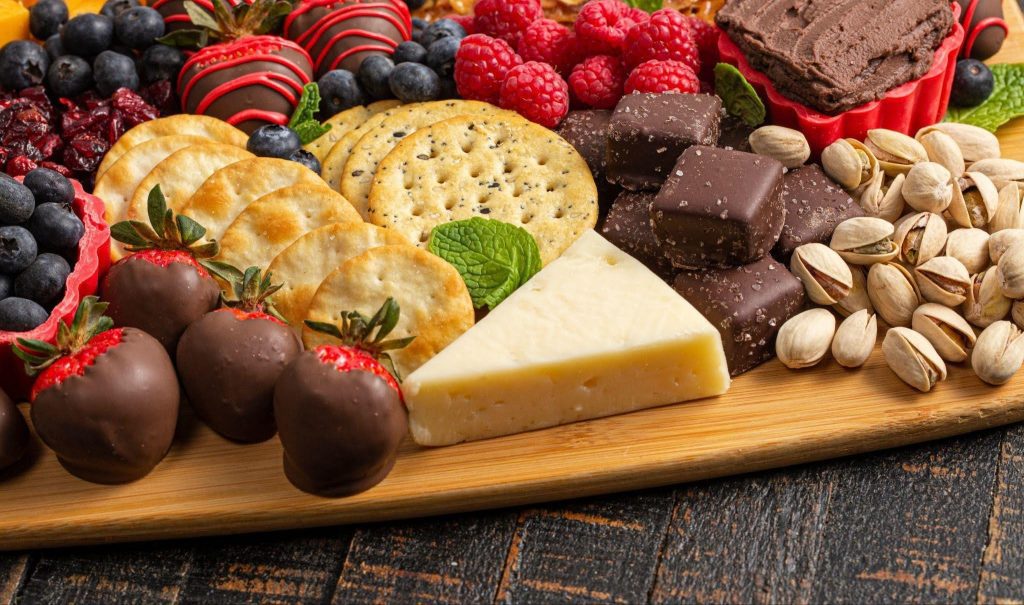
A wooden platter displaying a variety of fresh fruits and pieces of chocolate arranged artfully

Build a better chocolate charcuterie board with Amano Chocolate

A beautiful dessert board starts with thoughtful chocolate and simple pairings. Choose a few bars, add fruit, nuts, crackers, honeycomb, and creamy accents, then arrange everything with flavor progression in mind. Explore Amano’s chocolate to build a board that balances clarity and variety, so each guest discovers something distinct.

Understanding Kosher Certification in Chocolate: What Makes It Special?

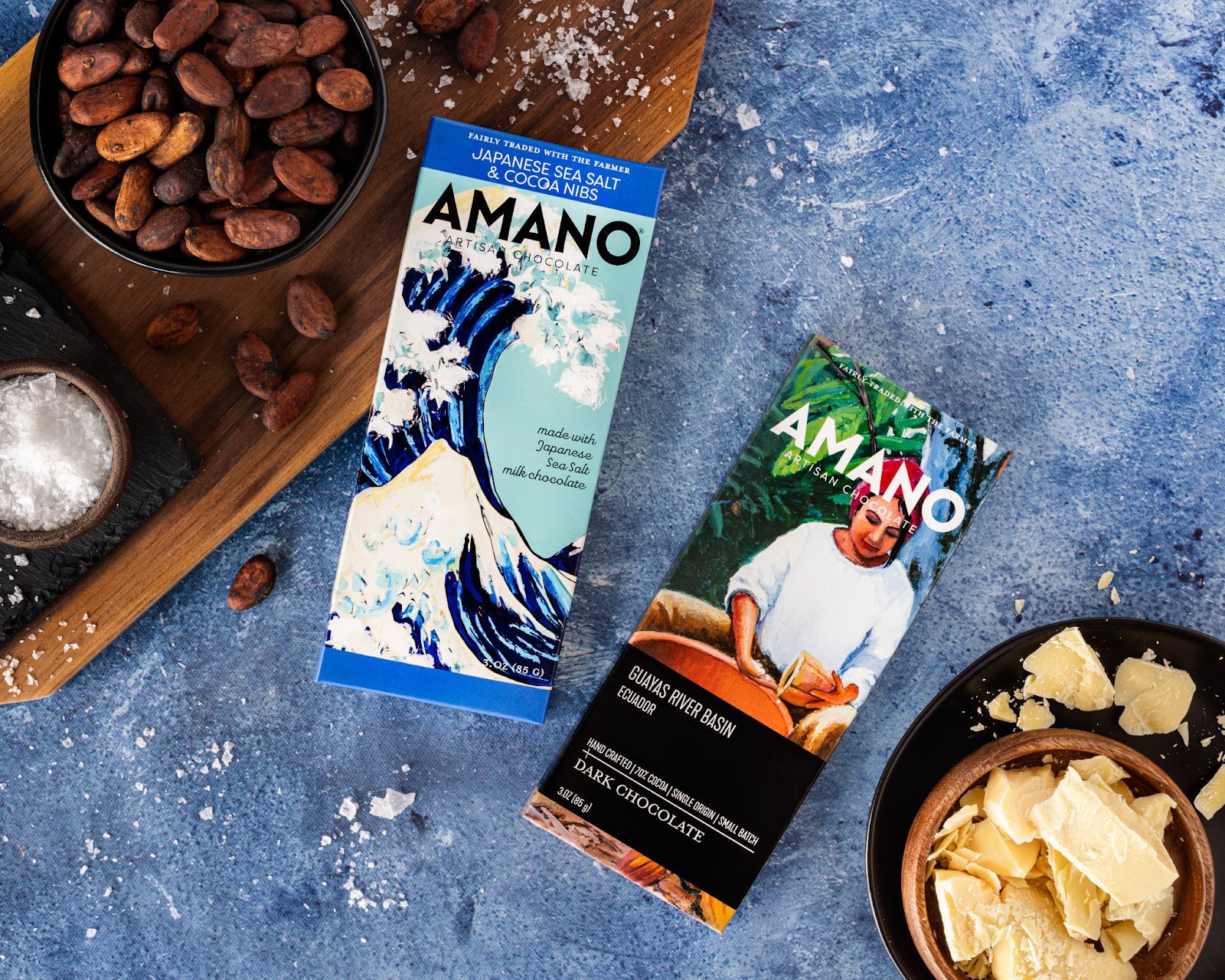
Five Amano Artisan Chocolate bars with unique designs and origins, displayed with cocoa beans.

For many chocolate lovers, kosher certification helps guide their choices and ensures they pick a bar made with care and integrity. While kosher standards originate from Jewish dietary laws, their influence goes far beyond religious tradition.

Kosher chocolate reflects deliberate sourcing, clean production methods, and transparent labeling. Brands that pursue kosher certification commit to high standards at every stage — from selecting ingredients to sanitizing equipment. Consumers gain more than a label; they receive chocolate crafted with discipline and trustworthiness.

In this blog, you’ll explore what kosher certification means in chocolate, how producers achieve it, and why it holds value for religious and non-religious consumers. Whether you seek purity, quality, or accountability, kosher chocolate delivers an experience rooted in principle and precision.

Defining kosher: More than a label

Kosher refers to food that aligns with Jewish dietary law, known as kashrut. These ancient guidelines define which foods people may eat, how they must be prepared, and how they must be handled from source to table. At their core, kosher laws promote spiritual discipline, ethical awareness, and rigorous attention to cleanliness, ingredient purity, and transparency.

Core kosher rules: Separation and supervision

To meet kosher standards, food must follow several foundational rules. Meat and dairy must remain completely separate — not only in the finished dish but throughout sourcing, processing, and serving. Equipment used for dairy cannot be used for meat, and vice versa. All ingredients must come from kosher-approved sources, and facilities must maintain strict cleanliness and oversight. 

Rabbinical authorities supervise and certify these practices, inspecting everything from production methods to packaging lines to ensure full compliance with kosher law. Their oversight begins long before the final product reaches store shelves. 

These trained experts verify that every ingredient used in the chocolate, such as lecithin, milk solids, or flavor extracts, comes from a kosher-approved source. They also assess whether the equipment used in production has been properly cleaned and maintained.

During on-site inspections, they observe how workers handle ingredients, monitor cleaning protocols, and confirm no cross-contamination. 

For example, if machinery processes kosher-dairy or non-kosher material and wants to process pareve (neutral) chocolate, the rabbi ensures that the equipment has been sterilized and thoroughly cleaned to meet kosher standards. Even packaging materials and storage practices come under scrutiny to maintain full integrity.

This level of supervision helps guarantee that every step of production aligns with Jewish dietary laws. Once the rabbinical authority confirms all requirements have been met, they grant kosher certification. 

This certification appears on the packaging in the form of a symbol (OU, Star-K, or Kof-K), which assures consumers that the chocolate has been produced with strict attention to cleanliness, transparency, and religious observance.

Why chocolate needs kosher oversight

Although chocolate may seem straightforward, its ingredients and manufacturing process introduce unexpected complexity. Chocolate often contains emulsifiers like soy or sunflower lecithin, flavorings, or milk derivatives that require kosher validation. Even natural flavors and processing aids must be traced back to kosher-certified sources.

Equipment used to melt, mold, or package chocolate must also meet strict criteria. If it was previously used for non-kosher products, it must be sterilized or designated for kosher use only.

Kosher as a mark of integrity

These rules may seem technical, but they ultimately serve a broader purpose. Kosher certification guarantees that food production involves accountability at every level. Consumers know exactly what goes into their chocolate and how it is handled. 

For those who observe kosher dietary laws, this is a spiritual necessity. For others, it reflects a deeper commitment to quality, ethical sourcing, and transparency.

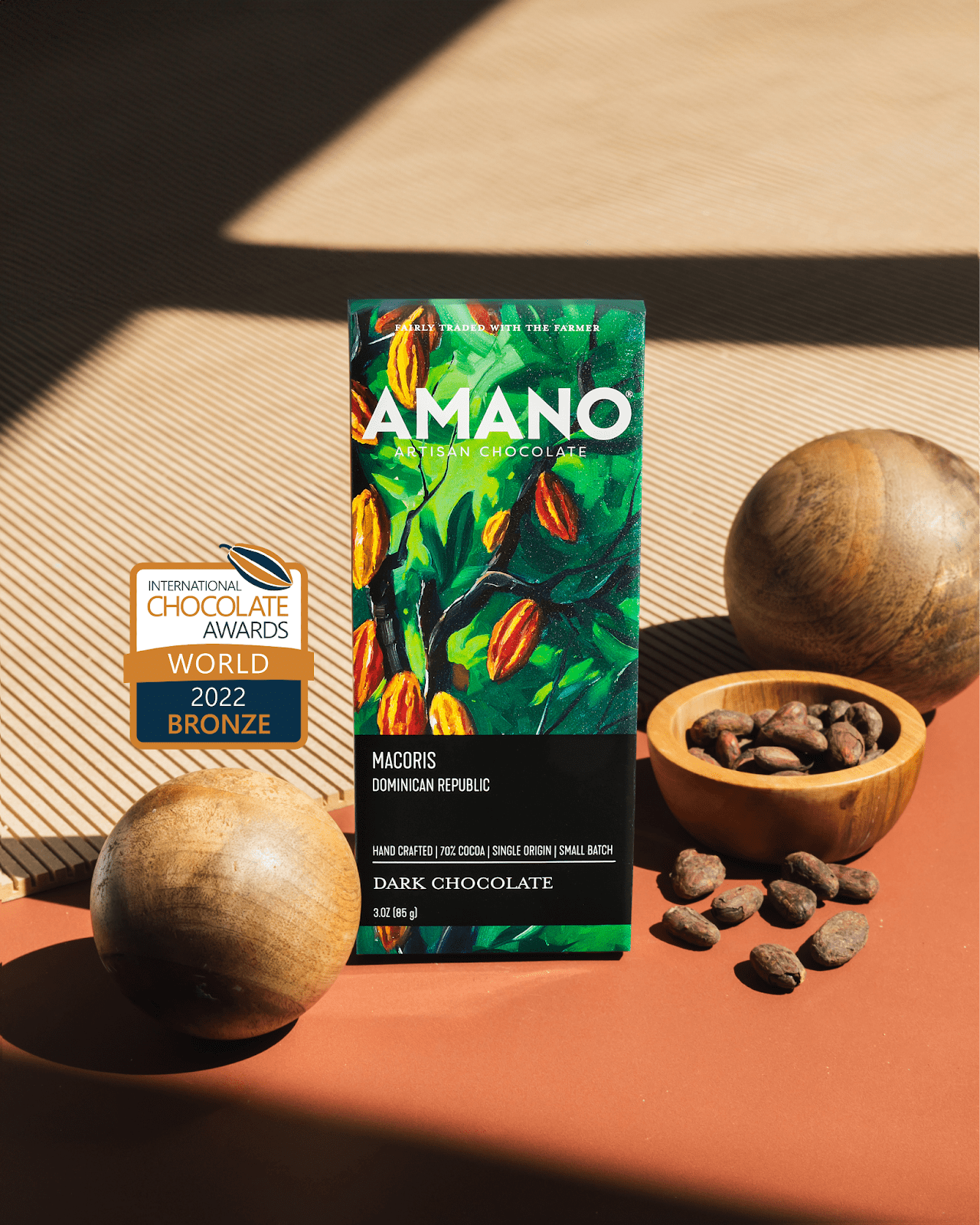
Amano Artisan Chocolate bar with a 2022 International Chocolate Awards Bronze medal, displayed with cocoa beans and wooden spheres.

What makes chocolate kosher — or not?

Kosher chocolate requires precision at every stage of production. While raw cacao beans naturally qualify as kosher, turning them into a finished chocolate bar introduces complexities that must align with the detailed requirements of kashrut.

Every ingredient matters

One of the most critical steps involves verifying every ingredient. Chocolate contains more than cacao and sugar. Additives like lecithin, dairy solids, and flavor extracts can all impact kosher status. Lecithin might come from soy, sunflower, or egg yolk — each must originate from a kosher-certified source. 

Even vanilla extract often contains alcohol, which must be derived through kosher-approved fermentation or distillation methods. Milk ingredients must come from kosher animals and undergo rabbinical oversight from farm to processing.

Equipment influences kosher integrity

Kosher status depends not only on ingredients but also on how and where chocolate is made. Production equipment plays a major role. Many chocolate facilities use shared machinery for various products, including non-kosher items like dairy or gelatin. 

Producers must follow rigorous cleaning protocols to maintain kosher certification and use dedicated equipment when necessary. Some manufacturers even assign entire production lines to kosher chocolate to prevent contamination.

Certification requires full environmental oversight

Kosher certification extends beyond recipes and tools. It includes oversight of the entire production environment. Certification agencies regularly inspect facilities to monitor ingredient sourcing, handling procedures, sanitation standards, and even employee practices. 

For instance, if a spatula touches both dairy and non-dairy chocolate without proper sterilization, even a trace of residue could invalidate an entire batch.

Trusted agencies provide clarity and assurance

Organizations like the Orthodox Union (OU), Kof-K, and Star-K lead kosher certification efforts worldwide. The logos on the chocolate packaging provide consumers with assurance and transparency. These marks represent a commitment to integrity, accountability, and quality throughout the chocolate-making process.

Kosher chocolate reflects care and craftsmanship

A chocolate bar carrying kosher certification tells a story of thoughtful sourcing, responsible production, and deep respect for tradition. Whether someone seeks kosher products for spiritual observance or values the discipline behind them, certified chocolate offers confidence, cleanliness, and character in every bite.

Pareve vs. dairy kosher chocolate

Kosher chocolate falls into two main categories: pareve and dairy. This distinction matters for anyone observing kosher dietary laws and also serves consumers with specific food preferences or restrictions.

Pareve

Pareve chocolate contains no meat or dairy ingredients and undergoes production on equipment free from dairy contact. Because pareve products remain neutral, they fit seamlessly into kosher meals, whether served with meat or dairy. 

Achieving true pareve status requires exceptional care. Chocolate must exclude ingredients like butterfat, milk powder, or whey and remain uncontaminated by residual traces on machinery. Many chocolate makers dedicate separate production lines to maintaining that standard.

This level of separation makes pareve chocolate appealing far beyond religious observance. People with lactose intolerance, dairy allergies, or vegan lifestyles often gravitate toward pareve options. For them, kosher certification provides extra assurance that no hidden dairy derivatives slip through the process.

Dairy kosher chocolate

In contrast, dairy kosher chocolate includes milk or milk-based ingredients that kosher certifiers have approved. Even if a chocolate bar contains no obvious dairy ingredients, it still counts as dairy if produced using equipment also used for dairy processing. 

In the kosher system, indirect contact carries the same weight as direct inclusion. That’s why certification agencies closely monitor not only ingredients but also the entire production environment to confirm a chocolate’s dairy status.

Kosher labeling clarifies this distinction. A symbol like “OU-D” signifies kosher dairy, while “OU” alone or “OU Pareve” signals a dairy-free product. Other certifying bodies, such as Kof-K or Star-K, follow similar labeling conventions. Shoppers who know what to look for can quickly make informed choices at a glance.

Understanding whether a chocolate is pareve or dairy affects everything from meal planning to gift-giving. With proper labeling and certification, kosher chocolate makes it easier to accommodate a wide range of diets while maintaining trust in the product’s integrity and flavor.

How kosher certification benefits all consumers

Kosher certification delivers practical advantages that elevate the chocolate experience for everyone. Whether you follow kosher dietary laws or simply value transparency and quality, certified chocolate gives you confidence in every bite.

Kosher standards raise the bar 

Kosher certification introduces a level of discipline that strengthens every stage of chocolate production. Certifying agencies oversee the entire ecosystem in which chocolate takes shape. Their inspections extend from the supply chain to the production floor, ensuring that every element aligns with kosher principles and industry best practices.

Inspectors examine sourcing documentation to confirm that each ingredient meets kosher standards, from lecithin and vanilla extract to more obscure processing aids. They also evaluate supplier integrity, checking that each partner follows transparent, ethical protocols. This encourages brands to maintain a cleaner, more accountable ingredient chain.

Within the factory, kosher inspectors assess sanitation procedures with a level of scrutiny that surpasses most standard food safety audits. Equipment must be thoroughly sterilized between batches, especially when switching from dairy to pareve production. Storage areas, utensils, and packaging stations must remain organized and free from cross-contamination. Even water sources and temperature control systems receive attention.

These evaluations involve ongoing supervision, surprise audits, and real-time problem-solving. Kosher-certified companies commit to continuous compliance, which fosters a culture of consistency and excellence. 

The result benefits every consumer. Whether motivated by religious values or a desire for better food standards, buyers receive chocolate crafted with care, oversight, and a deep respect for purity.

Clear labeling builds trust 

When a product displays a kosher certification symbol, it signals more than religious compliance. It reflects a commitment to full transparency. These symbols instantly communicate whether a product qualifies as dairy, pareve, or meets other dietary standards, helping shoppers make informed choices without second-guessing.

This level of labeling provides confidence and peace of mind for individuals with dietary sensitivities, food allergies, or ethical preferences. Kosher-certified brands often adopt a more detailed approach to packaging, including sourcing disclosures, allergen warnings, and notes about equipment used in processing. 

Many go further by outlining their handling procedures, verifying cross-contamination controls, or listing whether ingredients like lecithin, flavorings, or emulsifiers meet specific purity standards.

This attention to detail makes product selection easier, especially for consumers who prioritize clean ingredients or follow multiple dietary rules. Instead of decoding complicated ingredient lists, shoppers receive clear, reliable guidance from symbols and accompanying disclosures. 

In an increasingly complex food market, that kind of clarity builds lasting trust between makers and their customers.

Certified chocolate fits more lifestyles 

Many pareve chocolates work well for people who avoid dairy, whether for health, allergy, or personal reasons. Kosher labeling often overlaps with vegetarian, gluten-free, and allergen-conscious needs, offering something for a wider audience.

When you choose kosher-certified chocolate, you support brands that prioritize integrity, traceability, and excellence. This added layer of accountability makes a noticeable difference on the label and in the flavor.

Amano Chocolate and kosher standards

Amano Artisan Chocolate bars with cocoa nibs, sea salt, and dark chocolate, surrounded by cocoa beans and chocolate pieces.

Amano Chocolate brings craftsmanship, transparency, and integrity to every bar, and its kosher certification reflects that dedication. A handful of selections in the Amano collection carry kosher certification, offering chocolate lovers an option that aligns with both dietary values and elevated taste.

Amano’s commitment starts with sourcing. The team works directly with cacao growers in renowned regions such as Madagascar, Venezuela, and Ecuador, selecting beans with distinct character and exceptional quality. 

Each step — from fermentation to roasting and conching — honors the cacao’s natural flavor. Every ingredient used in Amano chocolate meets strict quality requirements, with no shortcuts, fillers, or artificial enhancements.

Kosher certification supports this high standard. Amano follows clean production practices, ensuring ingredients remain pure and equipment stays free from cross-contamination. The company works with trusted certifying bodies to maintain full compliance and uphold consumer trust. 

You will find clear labeling on certified products, which makes it easier to choose chocolate that matches your needs and preferences.

Kosher certification plays a role in a much larger story at Amano. It represents a promise to craft chocolate with honesty, excellence, and respect for the people who grow the beans and the individuals who enjoy the final creation. Whether you seek ethical sourcing, refined taste, or a brand that prioritizes every detail, Amano delivers.

Shop all Amano chocolate and experience the artisan difference. 

Amano’s award winning chocolate

Dark chocolate bar on a white marble surface with small sesame seeds scattered around. A corner piece is missing, creating a sense of indulgence.

Amano’s award winning chocolate

Indulge in our delectable award winning chocolate.

Indulging in a piece of delectable, award winning chocolate is one of life’s little luxuries. There is something truly special about taking a bite of our luxury chocolate bars, and knowing that it has been crafted with the finest ingredients and expertise. Amano Chocolate, a luxury chocolate brand, has received international recognition for their exceptional bean to bar chocolate. At the 2022 World Finals for the International Chocolate Awards, Amano Chocolate received several accolades for their outstanding chocolate, including silver, bronze, and special prizes. Let’s take a closer look at the award winning chocolate bars from Amano Chocolate and what makes them the best chocolate in the world. 


Madagascar – Dark Chocolate

Amano Chocolate’s Madagascar chocolate is a customer favorite for a reason. The cocoa used to make this chocolate comes from a plantation in the Sambirano Valley on the northwest coast of Madagascar. The beans are carefully roasted, stone ground, refined, and conched to bring out the very best flavors of the exotic cocoa beans. This laborious process pays off, resulting in a symphony of flavors that explode in your mouth. The Madagascar chocolate has a score of 88.4/100 and won the Silver award in the Plain/Origin dark chocolate bars category at the International Chocolate Awards World Finals.


Guayas – Dark chocolate

The Guayas chocolate from Amano Chocolate is another award winning chocolate that’s rich and intoxicating. The cocoa used in this chocolate comes from a small, remote community in the Guayas River Basin just up the river from Guayaquil, Ecuador. The beans have a rich flavor that is intoxicating and beautiful. Amano Chocolate uses these wonderful beans to make a chocolate that has an incredible flavor, leaving you asking for more. The Guayas chocolate has a score of 86.7/100 and won the Bronze award in the Plain/Origin dark chocolate bars category at the International Chocolate Awards World Finals.


Macoris – Dark chocolate

Amano Chocolate’s Macoris chocolate has a unique backstory. Amano Chocolate’s founder, Art Pollard, found a beautiful cocoa plantation that forever caught his imagination. The cocoa plantation was overcast, and the cocoa trees were new and laden with a rainbow of cocoa pods. The light coming through the leaves gave the founder the feeling that if there really was a Garden of Eden, it would be just like this. After seven years of negotiations, Amano Chocolate was finally able to create chocolate with beans from this magical place. The Macoris chocolate has a score of 86.6/100 and won the Bronze award in the Plain/Origin dark chocolate bars category at the International Chocolate Awards World Finals.


Citrus Mélange À Trois – Milk Chocolate

Amano Chocolate’s Citrus Mélange À Trois is a chocolate that perfectly balances the flavor of cocoa with citrus. The chocolate is made with cocoa that Amano Chocolate obtains from farmers in Ecuador. Amano Chocolate then combines it with the oils from yuzu, an incredible citrus from Japan, tangerine, and grapefruit. The chocolate also contains tiny pieces of orange fruit leather, giving it an incredible juicy sensation. The Citrus Mélange À Trois chocolate has a score of 86.9/100 and won the Bronze award in the Dark chocolate bars with inclusions or pieces category at the International Chocolate Awards World Finals.


Raspberry Rose – Milk Chocolate

The Raspberry Rose chocolate from Amano Chocolate is a rich dark chocolate made with cocoa beans from the Guayas River Basin in Ecuador. It has bright raspberry notes, followed by beautiful fruity and floral hints of rose petals. The chocolate also contains crunchy bits, making it extra electrifying. The Raspberry Rose chocolate has a score of 85.8/100 and won the Bronze award in the Dark chocolate bars with inclusions or pieces category at the International Chocolate Awards World Finals.


The International Chocolate Awards

The International Chocolate Awards is a prestigious organization that recognizes excellence in the chocolate industry. The organization hosts competitions around the world to identify the best chocolate makers, chocolatiers, and pastry chefs. The judging panel includes food writers, cacao and chocolate experts, journalists, and IICCT-certified chocolate tasters from different regions around the globe. The entrants compete in over 40 categories ranging from plain to flavored bars and include ganache truffles, pralines, caramels, dragées, spreads, and cocoa ingredients. Amano Chocolate’s success at the International Chocolate Awards is a testament to their commitment to producing the best chocolate in the world. As these accolades demonstrate that Amano Chocolate is not only recognized by the International Chocolate Awards but also by other prestigious organizations in the industry. Their meticulous bean to bar chocolate process ensures that every chocolate bar they create is of the highest quality. Amano Chocolate’s dedication to its craft has not gone unnoticed by the Academy of Chocolate, another renowned organization that recognizes excellence in the chocolate industry. Amano was the very first American chocolate company to ever receive an award from the Academy of Chocolate with its Madagascar 70% Dark Chocolate. No American company had ever received an award prior to that.


Taste the difference 

Given the countless international awards that Amano Chocolates luxury chocolate bars have received, it is clear that you need to take the opportunity to taste the Charm of Amano chocolate. Our award winning chocolate bars are a testament to our commitment to producing the best chocolate in the world. Amano’s success at the International Chocolate Awards and the Academy of Chocolate awards is a reflection of our dedication to the craft. If you are a chocolate connoisseur looking for the best of the best, Amano Chocolate should be on your list of luxury chocolate brands to try